
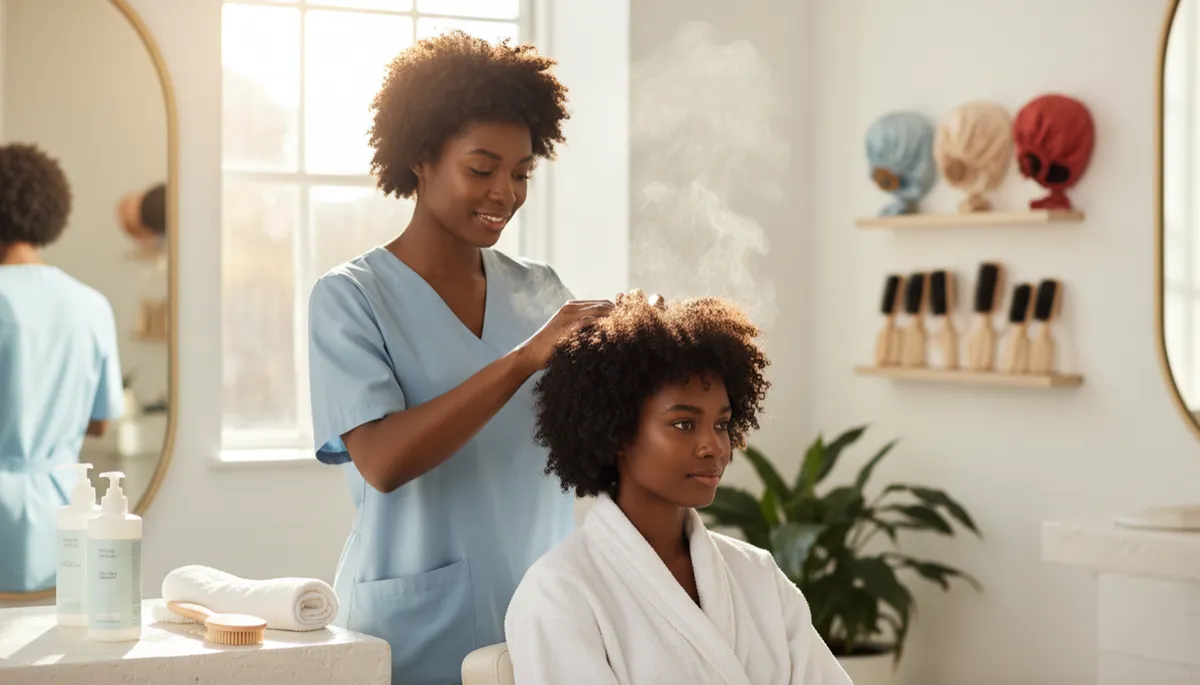
Keep Your Scalp Clean Between Wash Days
Natural Hair Care, Scalp Health, Coily & Curly Hair
How to Keep Your Scalp Clean Between Wash Days
A cosmetologist’s guide to keeping coily, afro-textured and curly scalps fresh, comfortable and buildup-free without overloading your roots with products.
Why Coily, Afro-Textured and Curly Scalps Feel “Dirty” Between Washes
In the salon, one of the most common concerns I hear from clients with coily, afro-textured and curly hair is, “My scalp feels dirty again, but I just washed.” Often the first instinct is to reach for oil, grease, a scalp spray or a new “refresh” product. From a scalp science and cosmetology point of view, that usually makes the problem worse, not better.
Our scalps naturally produce sebum, mix it with sweat, shed skin cells and collect environmental particles. On curls and coils, that mix does not slide down the hair shaft as easily as it does on straight hair. It tends to sit closer to the scalp. When we keep adding layer after layer of oils, butters and sprays on top, we create a film that traps even more debris and can leave the scalp feeling coated, itchy and less fresh between wash days.
What Hair and Scalp Science Tells Us About Cleanliness
Healthy scalps stay comfortable when there is a gentle balance. We want natural oils present, but we also want regular removal of sweat, dead skin cells, styling products and everyday dirt. In professional terms, that means using mild cleansers at a frequency that works for your hair type, lifestyle and styling choices, instead of trying to “reset” the scalp with more product on top of buildup.
Current scalp research supports what I see behind the chair: the scalp environment does best when it is cleansed regularly with gentle surfactants, not constantly coated. The goal is not to strip your coils, but to keep the scalp surface clear enough so that it can breathe, stay comfortable and support healthy hair growth patterns over time. Heavy product layering works against that goal by creating thicker films that are harder to rinse away and more likely to hold onto sweat and odor.
💡 Stylist’s note: When clients commit to gentler but more consistent cleansing, their scalps usually feel calmer, and they often need fewer “soothing” products overall.
Regular Washing with Gentle Cleansers: Your Real Scalp Refresher
To keep scalp clean between wash days, we start by building a wash schedule that actually supports your scalp. For many people with coily, afro-textured and curly hair, a realistic routine looks like this:
Every 4 to 7 days when your hair is out, in twist outs, wash-and-gos or stretched styles that can handle more frequent cleansing with the right products and techniques.
Every 8 to 14 days when you are in protective styles like knotless braids, twists, sew-ins or other long-wear looks where full wash days are more involved.
Within that window, the cleanser you use matters. Look for gentle shampoos or cleansing creams that foam lightly, rinse clean and are designed for textured hair. In my chair, clients who do best between wash days usually:
Focus their shampoo on the scalp, using fingertips to lift product and sweat without scratching.
Allow the lather to gently run through the lengths instead of rough scrubbing the strands.
Rinse thoroughly, then follow with a hydrating conditioner or mask focused on the mid-lengths and ends.
💡 Pro Tip: If your hair is very coily or dense, section it into 4 to 8 parts before shampooing. This helps you reach your scalp and rinse more completely, which keeps it feeling cleaner for longer.
Why Frequent Product Layering Can Make Your Scalp Feel Dirtier
A common natural-hair habit is to respond to every bit of tightness, dryness or itch by adding something to the scalp. Oil on Monday, a “refresh” spray on Tuesday, growth drops on Wednesday, edge control on Thursday, and so on. By the weekend, the scalp has barely seen water, but it has seen a lot of product. From a professional point of view, that is a recipe for buildup and discomfort between wash days.
When you layer multiple products, especially thicker ones like greases, butters and heavy oils, several things happen:
They mix with sweat and natural sebum, creating a sticky film that can trap odor and debris.
They sit on top of the scalp surface, so the skin underneath does not get a true chance to feel clean or refreshed until wash day.
They can make rinsing and cleansing more difficult, which means you may need stronger shampoos to remove them, and that can feel drying.
In the salon, I often see clients who think their scalp is “dry” between washes, but when I separate the hair, I can see a visible layer of product and flakes sitting on top. Once we gently cleanse more consistently and cut back on how often they apply scalp products, that tight, dirty feeling usually improves without needing a medicine or a complicated routine.
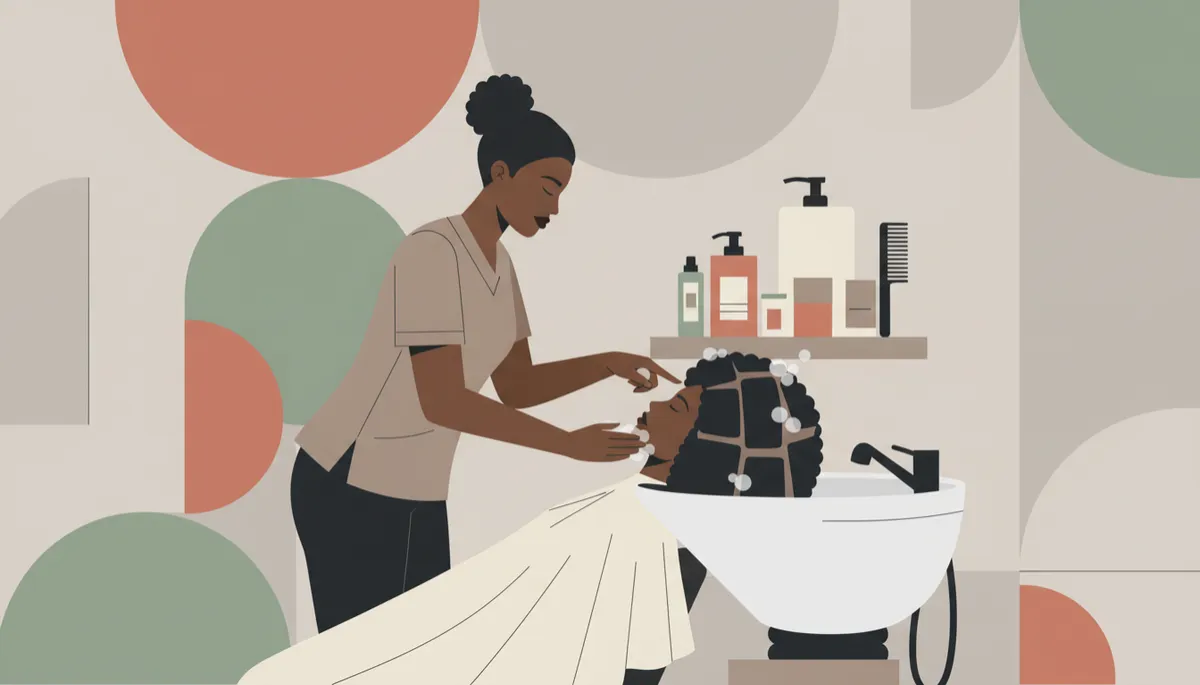
Sectioning the hair helps the scalp get truly clean, so you need fewer products between washes.
Managing Sweat Without Overloading Your Scalp
Sweat is a big reason scalps feel less fresh between wash days, especially if you work out, live in a warm climate or wear hats and headwraps often. Sweat itself is mostly water and salts, but when it dries on the scalp and mixes with product and sebum, it can leave a gritty, tight or salty feeling on the skin. Instead of trying to “mask” that with more oils or perfumes, focus on simple, non-heavy ways to manage sweat:
Post-workout rinse when possible: If your style allows, step in the shower and let lukewarm water run through your scalp for a quick rinse, then gently squeeze out excess water and allow hair to air dry or diffuse. This does not have to be a full wash day, but it removes some sweat and salt.
Use a clean, absorbent towel: After sweating, gently blot your scalp with a clean, soft towel or T-shirt. Focus on the hairline, nape and crown where sweat tends to collect. Avoid rough rubbing, which can cause frizz or irritation.
Allow your scalp to dry fully: If you wear a bonnet or scarf, give your scalp time to air out and dry before covering it again. Trapping dampness for long periods can make the scalp feel less fresh.
💡 Stylist’s note: If you are working out daily and sweating heavily, your scalp may simply need washing a bit more often. Gentle, frequent cleansing is usually kinder than letting sweat and product build up for two weeks.
Clean Bonnets, Scarves, Pillowcases, Combs and Brushes Matter More Than You Think
Even when you cleanse your scalp well, dirty tools and fabrics can quickly undo that fresh feeling. I often remind clients that anything touching your scalp or hair regularly can either help you stay clean between wash days or reapply old oils, sweat and dust right back to your roots.
Bonnets and Scarves
Satin and silk bonnets are wonderful for protecting coils and curls, but they collect product, sweat and skin cells over time. To keep scalp clean between wash days:
Wash your bonnet or scarf at least once a week, more often if you are heavy-handed with products or sweat a lot at night.
Rotate between two or three bonnets so one can fully dry before you wear it again.
Pillowcases and Sheets
Even if you wear a bonnet, some oils and products still transfer to your pillowcase and sheets. When those fabrics are not washed regularly, your clean scalp ends up resting on old product every night. Aim to:
Change pillowcases at least once a week, more often if you sleep without a bonnet or have very product-rich styles.
Choose smooth fabrics that are gentle on textured hair, such as satin pillowcases, to reduce friction and tangles.
Combs, Brushes and Styling Tools
I like to remind clients that combs and brushes are like dishes. You would not keep eating off the same plate without washing it. The same goes for tools that touch your scalp and hair repeatedly. Product residue, lint and shed hair collect quickly and can be transferred back onto a freshly washed scalp. To support a clean-feeling scalp between wash days:
Remove hair from combs and brushes after each use.
Once a week, soak tools in warm water with a mild shampoo, gently scrub, rinse well and let them air dry completely.
💡 Pro Tip: If your scalp feels dirty but you are keeping up with wash days, check your bonnet, pillowcase and brushes. Fresh tools often make a bigger difference than another scalp product.
Avoiding Unnecessary Scalp Products Between Washes
There is a big difference between moisturizing your hair and coating your scalp. The scalp usually does not need as many products as the lengths of coily and curly hair. In my professional experience, most clients’ scalps do best when we:
Apply creams, leave-ins and oils mainly to the mid-lengths and ends, not directly to the scalp skin.
Use scalp-specific products sparingly and with intention, not every single day just out of habit.
Avoid stacking multiple “growth” oils, greases and sprays on top of each other between washes.
If your scalp truly needs comfort between washes, choose one light product with a simple ingredient list, apply a small amount, and gently massage it in. If you find yourself wanting to reach for it every day or multiple times a day, that is usually a sign your scalp needs water and cleansing, not more coating.
When It Is Better to Wash Instead of “Refreshing” the Scalp
One of the most helpful skills you can build is learning to recognize when your scalp needs an actual wash instead of another refresh product. Here are some signs I coach clients to look for:
Your scalp feels tight, coated or “stuffy,” even after using a light oil or spray.
You can see visible flakes, product residue or a dull film on the scalp surface or along your parts.
Your style feels heavy or flat at the roots much sooner than it used to.
You notice an odor that comes back shortly after using a perfumed spray or oil.
In these cases, the kindest thing you can do for your scalp is to schedule a wash, even if it is a bit earlier than you planned. That might mean washing at day 4 instead of stretching to day 7, or at day 9 instead of forcing yourself to reach day 14 in a protective style. Over time, most clients find a rhythm where their scalp feels comfortable and clean without constant refreshing in between.
💡 Stylist’s note: Washing a little sooner with a gentle cleanser is usually less stressful for coily and curly hair than living with weeks of buildup and then needing a harsh reset.
Wash Frequency: 4-7 Days vs 8-14 Days with Protective Styles
Washing Every 4 to 7 Days
For many clients who wear their coily or curly hair out, a wash every 4 to 7 days strikes a nice balance. It keeps the scalp clear enough to avoid heavy buildup, while giving styles time to last. This schedule works well if:
You exercise regularly and sweat into your scalp several times a week.
You use styling creams, gels or edge controls that can build up quickly.
You prefer wash-and-go, twist out or braid out styles that can be reset without too much manipulation.
Washing Every 8 to 14 Days with Protective Styles
When you are wearing braids, twists, sew-ins or other protective styles, washing every 8 to 14 days is often more realistic. The key is to keep the scalp as free from extra product as possible during those weeks, so your wash days can still cleanse effectively without disturbing the style too soon. For protective styles, I typically recommend:
Using a diluted gentle shampoo in an applicator bottle to reach the scalp lines and rinse thoroughly.
Limiting scalp products to light, occasional use when truly needed for comfort, not as a daily habit.
Continuing to keep bonnets, scarves and pillowcases clean so you are not pressing old buildup back into your new growth.
Simple Routine to Keep Your Scalp Clean Between Wash Days
Here is a sample routine you can adapt to your lifestyle and texture:
Choose your wash rhythm: Decide whether a 4-7 day or 8-14 day schedule is more realistic based on your styling and lifestyle.
On wash day: Section your hair, use a gentle cleanser focused on the scalp, rinse thoroughly and condition the lengths.
Right after wash day: Clean your combs and brushes, put on a freshly washed bonnet or scarf, and change your pillowcase.
During the week: Moisturize your hair, not your scalp, unless it truly feels uncomfortable. Use one light scalp product only when needed, not daily out of habit.
After sweating: Blot your scalp with a clean towel, allow it to dry before covering, and rinse with water or wash if it feels coated or gritty.
FAQs: Keeping Your Scalp Clean Between Wash Days
How often should I oil my scalp between wash days?
Many coily and curly clients do not need to oil the scalp every day. Focus on keeping the scalp clean with gentle washes. If your scalp feels tight or dry, use a small amount of a light oil when needed, then reassess your wash frequency. Daily oiling on top of sweat and products often leads to buildup instead of comfort.
Can I use dry shampoo on my natural hair to keep my scalp fresh?
Most dry shampoos are designed for straighter textures and can leave visible residue on darker, coily and curly hair. They also add more particles to the scalp surface, which can contribute to buildup. For textured hair, a gentle cleanse with water and a mild shampoo or a quick rinse is usually a better option than relying on dry shampoo to keep scalp clean between wash days.
My scalp itches a lot before wash day. Does that mean it is dirty?
Itching can have many causes, but buildup is a very common one. If your scalp feels itchy a few days after washing, first look at how many products you are layering and how often you are cleansing. Reducing heavy scalp products and washing with a gentle cleanser more consistently often helps the scalp feel calmer. If irritation continues, it is always a good idea to check in with a qualified professional for personalized advice.
Is it bad to wash my coily or afro-textured hair every week?
With the right products and techniques, many clients do very well washing every week. The key is using gentle cleansers, conditioning properly and handling the hair in sections to avoid tangling. Weekly washing often keeps the scalp more comfortable and reduces the need for heavy product use between wash days.
How can I keep my scalp clean in braids or twists for 2 weeks?
Focus on three things: dilute shampoo applied directly to your scalp lines and rinsed well, minimal use of scalp products between washes, and clean bonnets, scarves and pillowcases. Blot your scalp after sweating and allow it to dry before covering. These simple habits help your scalp feel fresher for the full 8 to 14 days.
Your Next Step with Harmony Strands
Keeping your scalp clean between wash days is less about chasing the newest scalp product and more about honoring the basics: gentle cleansing, thoughtful wash frequency, clean tools and fabrics, and lighter hands with oils and sprays. When you give your coily, afro-textured or curly scalp a clear, breathable environment, your hair has a healthier foundation to thrive from root to tip.
If you are ready to build a routine that feels good to your scalp and fits your real life, explore Harmony Strands education and services. Book a consultation with a stylist who understands textured hair, or sign up for our tips and guides tailored to coils, kinks and curls. Together, we can create a wash schedule and care plan that keeps your scalp feeling clean, calm and cared for between every wash day.