
Why Scalp-First Care Changes the Way We Think About Hair
Understanding how the scalp environment influences hair retention, follicle stability, and long-term hair health
Most conversations about hair begin with the strands.
People talk about length, curl definition, shine, and styling techniques. While these elements are visible and often celebrated, the biological foundation of healthy hair begins somewhere quieter.
Hair begins beneath the surface.
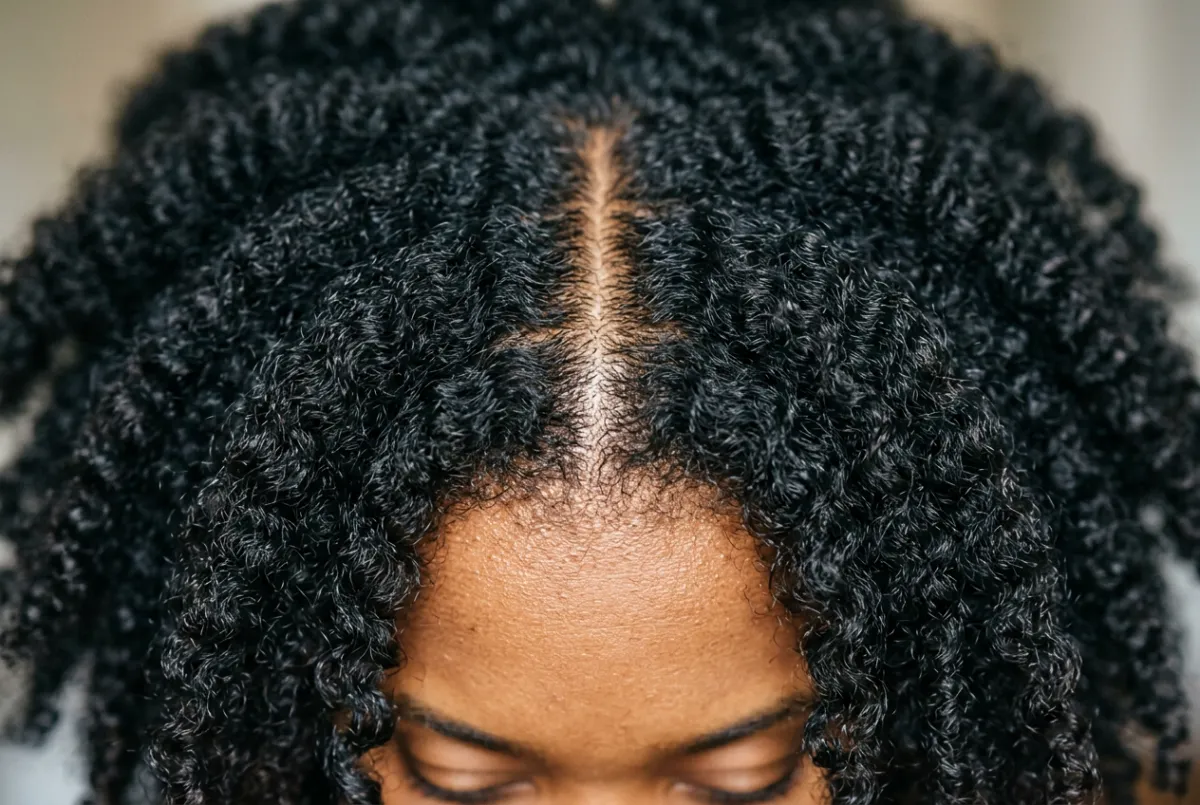
The scalp is the living environment where hair follicles function, where natural oil balance is regulated, and where the conditions that influence hair retention develop over time. When the scalp environment is supported with gentle routines and balanced care, the visible hair often responds with greater stability.
A scalp-first perspective simply means beginning where hair actually lives.
Why Scalp-First Care Changes the Way We Think About Hair
The Scalp Is a Living Environment
Hair Retention Is Often a Long-Term Pattern
The Role of the Hair Moisture Barrier
Low-Tension Care and Follicle Stability
A Different Way to Think About Hair
Why is scalp health important for hair growth?
Can scalp care improve hair density?
What is the hair moisture barrier?
Do tight hairstyles damage hair follicles?
The Scalp Is a Living Environment
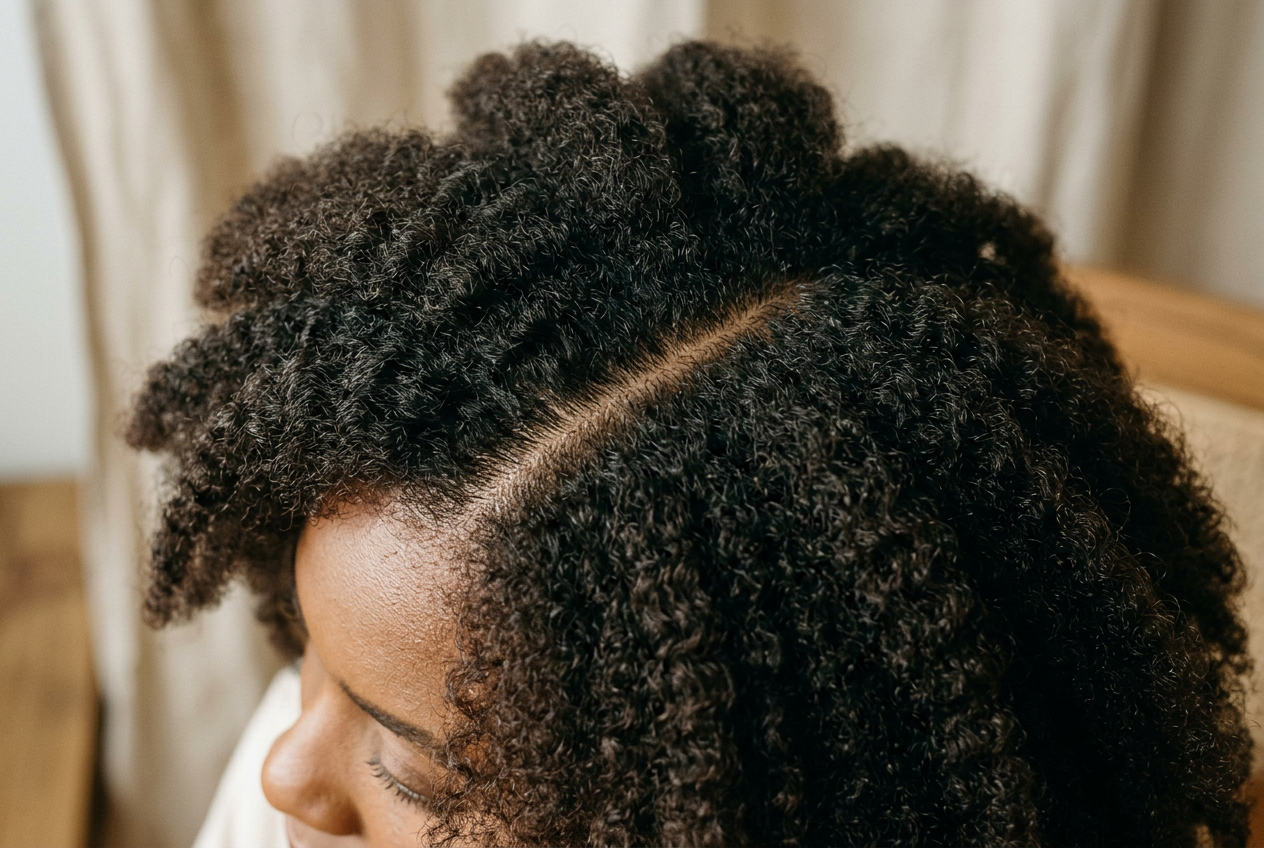
The scalp is not simply skin that holds hair. It is a biological environment supporting thousands of follicles, each producing a hair strand through a long and complex growth cycle.
Dermatology research explains that scalp conditions influence how hair follicles behave over time. Educational resources from the American Academy of Dermatology describe how scalp health can affect hair growth patterns and hair density.
Hair follicles respond to many factors, including:
tension placed on the hair
friction from styling habits
buildup that disrupts natural oil balance
moisture barrier stability
manipulation frequency
lifestyle rhythms and stress
When the scalp environment remains calm and balanced, follicles are more likely to maintain stability over time.
For a deeper exploration of this concept, see The Scalp as a Living Environment.
Hair care is not only about what happens to the strands.
It is about what happens where the hair begins.
Hair Retention Is Often a Long-Term Pattern
Many people search for quick solutions when they notice changes in hair density or increased shedding.
However, hair usually reflects patterns that develop gradually.
Frequent tension, aggressive detangling, heavy installations, or constant manipulation can slowly influence both the hair shaft and the follicle environment. Over time, these behaviors may affect breakage patterns and hair retention.
Hair follicles themselves operate on biological cycles that include growth, transition, and resting phases. These cycles influence how hair density changes over time. A scientific overview of these phases can be explored through the National Institutes of Health explanation of the hair follicle cycle.
A longevity mindset shifts the focus from quick correction to patient observation.
Instead of asking:
“How can I make my hair grow faster?”
A more useful question becomes:
“How can I support the scalp environment so follicles remain stable over time?”
Small adjustments in daily habits often matter more than dramatic changes.
You can explore this slower approach further in Why Hair Thrives When You Stop Rushing It.
The Role of the Hair Moisture Barrier
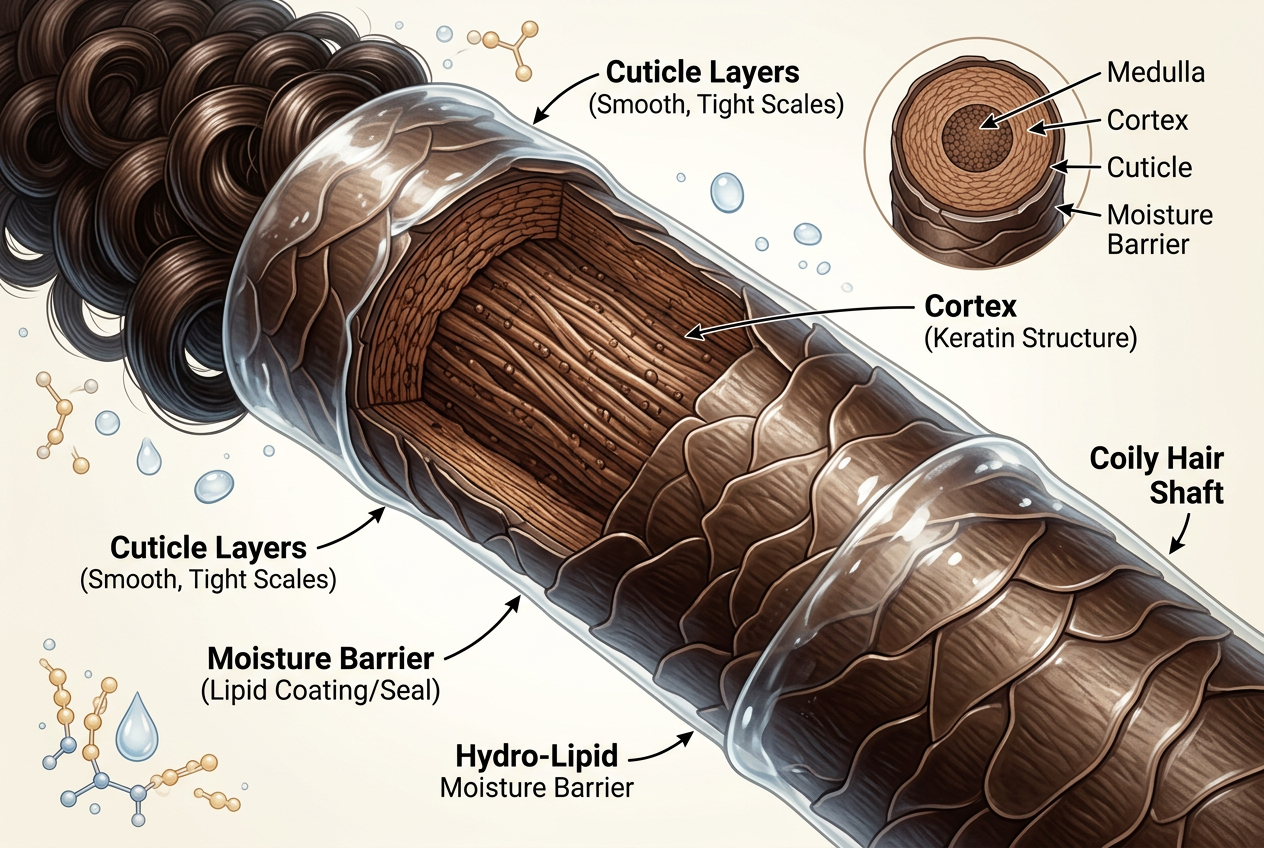
Another important element in hair longevity is the moisture barrier.
The moisture barrier refers to the balance that allows hair and scalp to maintain hydration while preventing excessive dryness or buildup.
Healthy hair strands rely on flexible cuticles that retain moisture while allowing natural evaporation. Cosmetic science research examining the structure of the hair fiber and its moisture behavior helps explain how hydration influences hair strength.
When the moisture barrier is supported:
hair tends to maintain better elasticity
strands experience less friction
breakage risk may decrease
scalp comfort improves
This balance rarely comes from large product collections. In many cases, it develops through gentle cleansing rhythms and thoughtful conditioning routines.
Supporting the moisture barrier is less about adding more products and more about maintaining balance.
Low-Tension Care and Follicle Stability
Another major influence on hair longevity is tension.
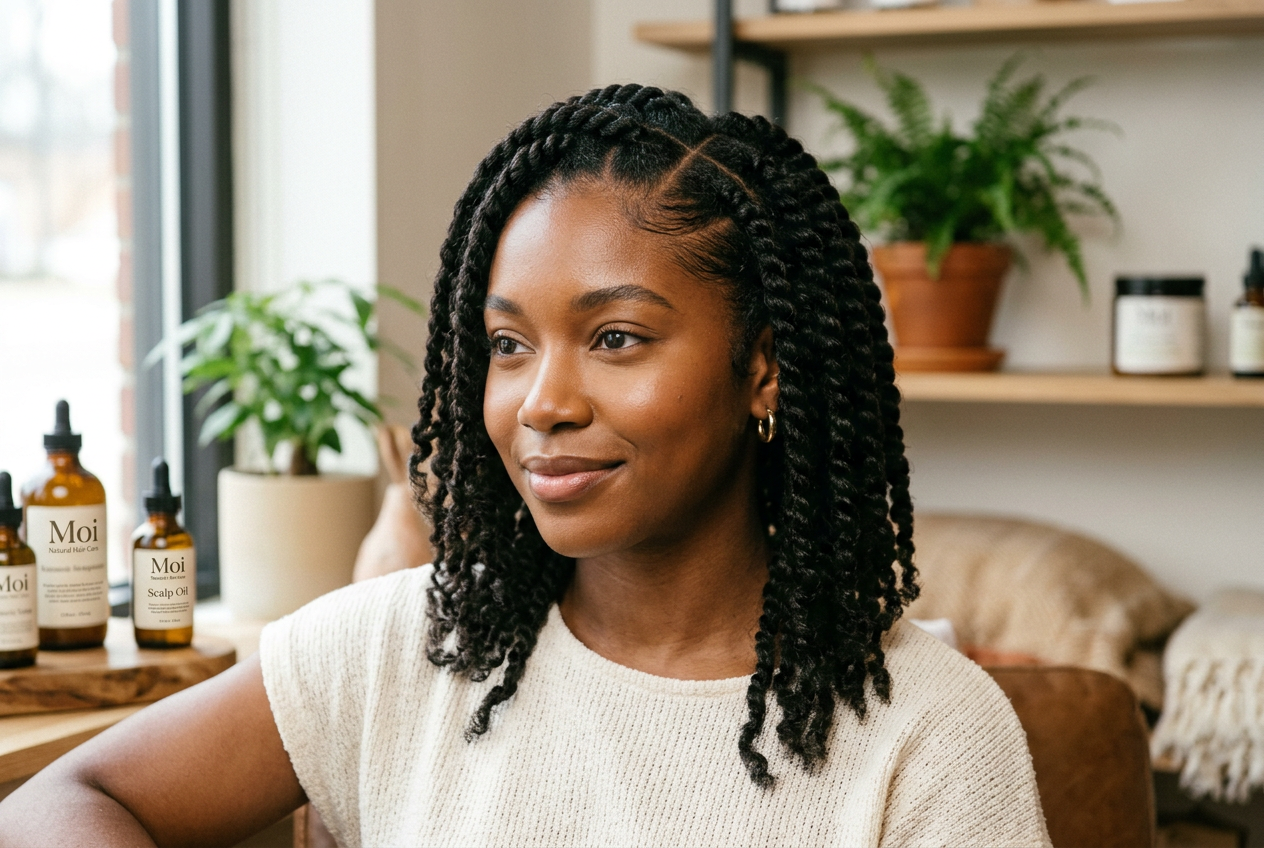
Styles that pull tightly on the scalp place repeated stress on the follicles. Over time, that stress can influence follicle stability and may affect hair retention, especially around the edges or crown.
A scalp-first philosophy encourages low-tension styling and gentle manipulation.
This does not mean avoiding styling entirely. Instead, it means evaluating styles through a different perspective:
Does the style allow the scalp to breathe?
Is weight distributed evenly across the scalp?
Can the scalp still be cleansed comfortably?
Does installation create excessive pulling around the edges?
Styles that respect these questions are more likely to support long-term hair retention.
We explore this idea further in Why Protection Is About Retention, Not Hiding Hair.
Hair Aging Is Natural
Hair also evolves over time.
As people age, follicles may behave differently. Hair density patterns may shift, grey fibers may appear, and texture may change.
A longevity approach respects these transitions rather than resisting them.
Hair aging is not a failure.
It is a natural biological progression that can be supported with thoughtful care, gentle routines, and adjustments that respect the needs of maturing follicles.
Supporting aging hair often means focusing even more on scalp comfort, moisture balance, and reduced manipulation.
Calm Care Often Works Better
Modern beauty culture often promotes urgency.
New trends appear constantly, promising dramatic transformation or rapid growth.
But hair is a slow biological system. Follicles operate on cycles measured in months and years rather than days.
Because of this, calm routines often outperform aggressive ones.
Healthy hair care habits often include:
gentle detangling
balanced cleansing
low-tension styling
consistent observation of the scalp environment
Over time, these habits create conditions that support hair retention and scalp balance.
This slower approach is discussed further in Why Rushing Your Hair Stops Growth.
Patience is often one of the most overlooked elements of hair care.
A Different Way to Think About Hair
A scalp-first perspective changes the starting point of hair care.
Instead of chasing trends or dramatic promises, it encourages a quieter relationship with the hair and scalp.
One built on:
observation
gentle maintenance
low-tension care
long-term routines
Hair responds best when the scalp environment is respected.
When the scalp remains balanced, the hair that grows from it has a better opportunity to remain stable over time.
Hair longevity begins where the follicles live.
At the scalp.
For a deeper exploration of this philosophy, read Harmony Strands: A Blueprint for Sustainable Hair Longevity.
Hair & Scalp Care FAQ
Why is scalp health important for hair growth?
The scalp is the environment where hair follicles live and produce hair strands. When the scalp maintains balanced moisture and low irritation, follicles are more likely to remain stable.
Can scalp care improve hair density?
Hair density is influenced by genetics, aging, and long-term habits. While scalp care cannot change genetics, maintaining a balanced scalp environment may support hair retention.
What is the hair moisture barrier?
The moisture barrier refers to the balance that allows hair strands to retain hydration while protecting the internal structure of the hair fiber.
Do tight hairstyles damage hair follicles?
Repeated tension from tight styles can place stress on follicles and the surrounding scalp tissue. Low-tension styling reduces unnecessary strain on the scalp environment.
Hair & Scalp Science References
The educational ideas shared in this article are informed by dermatology and cosmetic science research exploring scalp health and hair biology.
American Academy of Dermatology
https://www.aad.org/public/diseases/hair-loss
National Institutes of Health — Hair Follicle Cycle
https://www.ncbi.nlm.nih.gov/books/NBK546248/
MedlinePlus — Hair Loss and Hair Health Overview
https://medlineplus.gov/hairloss.html
Chemical and Physical Behavior of Human Hair (Cosmetic Science Text Reference)
https://pubmed.ncbi.nlm.nih.gov/21635848/
Continue Learning About Scalp-First Hair Care
You may also enjoy:
The Scalp as a Living Environment
https://harmonystrands.com/post/redefining-your-roots-scalp-health
Why Hair Thrives When You Stop Rushing It
https://harmonystrands.com/post/Why-Hair-Thrives-When-You-Stop-Rushing-It
Why Protection Is About Retention, Not Hiding Hair
https://harmonystrands.com/post/protection-is-about-retention-not-hiding-hair
Why Rushing Your Hair Stops Growth
https://harmonystrands.com/post/why-rushing-your-hair-stops-growth


