
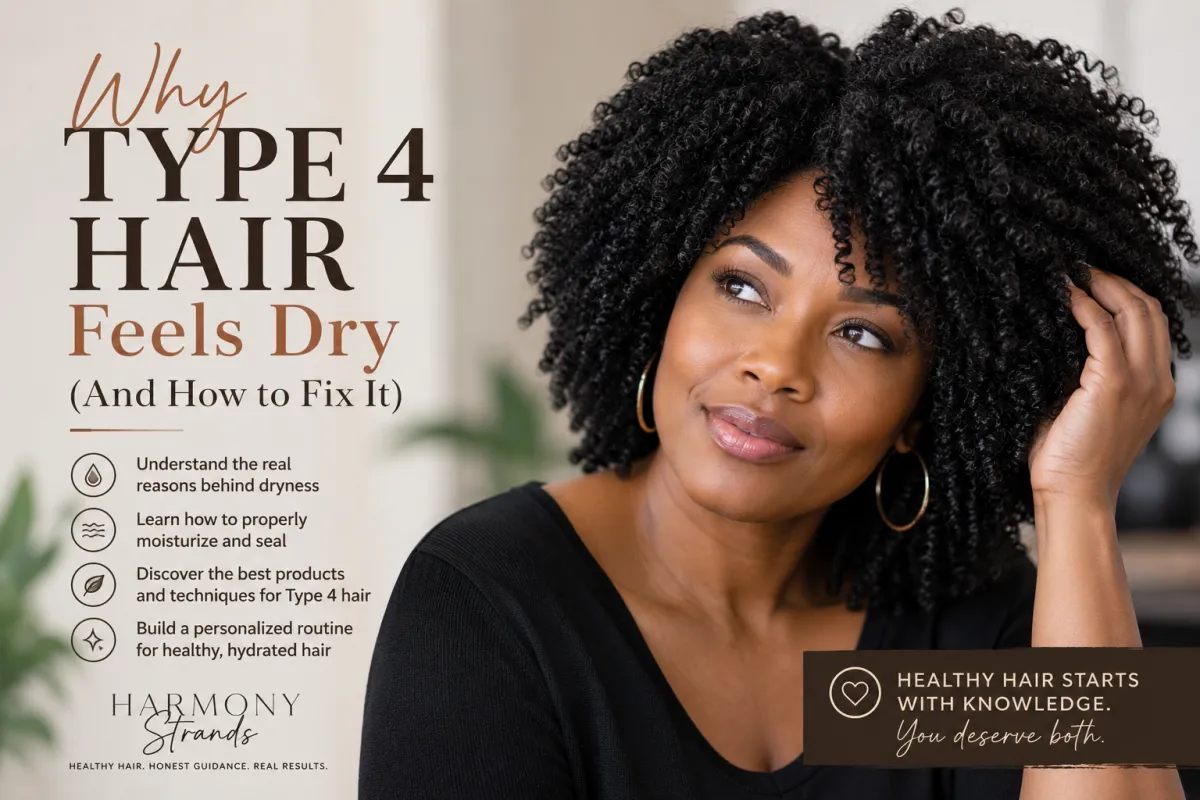
Why Type 4 Hair Feels Dry and How to Fix It
Hair Care, Type 4 Hair, Natural Curls, Moisture, Harmony Strands
Why Type 4 Hair Feels Dry (And How to Fix It)
If you have Type 4 hair and feel like it is always dry, no matter how many oils, creams, or “miracle” products you try, you are not imagining it. Coily, kinky, and tightly curled hair has unique needs, and when those needs are misunderstood, dryness becomes a constant battle. At Harmony Strands, we meet women every day who feel frustrated, confused, and a little discouraged. The good news: with the right knowledge, routine, and expectations, Type 4 hair can feel soft, hydrated, and beautifully manageable.
First, What Exactly Is Type 4 Hair?
Type 4 hair is often described as coily, kinky, or tightly curled. The strands form small curls, coils, or zig-zags that can range from soft and cottony to wiry and springy. Within Type 4, there are subcategories (4A, 4B, 4C), but they all share one thing in common: a lot of bends and curves along the strand.
Those beautiful curves are part of what makes Type 4 hair so stunning—and also part of why it tends to feel dry. Understanding this is the first step toward caring for your hair in a way that respects its natural structure instead of fighting against it.
Why Type 4 Hair Naturally Feels Drier
1. Your Scalp’s Natural Oils Struggle to Travel Down the Strand
Every scalp produces sebum, a natural oil that helps lubricate and protect the hair. On straighter hair types, that oil can slide easily from root to tip. On Type 4 hair, all those tight bends and coils make it much harder for sebum to travel down the strand. As a result, your roots may be fine, but your mid-lengths and ends can feel rough, dull, or brittle.
This doesn’t mean your scalp is failing you; it means your hair structure needs extra help to get moisture and lubrication where it’s most needed—especially the ends, which are the oldest and most fragile parts of the hair.
2. Type 4 Hair Often Has a More Open Cuticle Layer
The outer layer of your hair, called the cuticle, is made up of overlapping “scales.” In many Type 4 textures, especially when hair has been color-treated, heat-styled, or previously relaxed, that cuticle can be more raised or fragile. A raised cuticle allows moisture in—but it also lets moisture escape more quickly. That’s why your hair might feel great right after you apply a leave-in, and then dry again a few hours later.
This is what stylists often call porosity. High-porosity hair can drink up products but struggles to hold onto that hydration. Low-porosity Type 4 hair, on the other hand, may resist moisture at first but hold onto it better once it’s in. Both can feel dry if not cared for properly, just in different ways.
3. Shrinkage Can Make Hair Feel Drier Than It Is
Shrinkage is a sign of healthy elasticity, but it can also play tricks on how your hair feels. When coils spring up tightly, the strands can rub against each other more, leading to friction, tangling, and a rougher feel. Even when your hair has moisture inside, the surface can still feel dry or “crispy” if it’s not properly lubricated and protected from friction.
4. Product Buildup and Hard Water Can Block Moisture
Many women with Type 4 hair layer on creams, oils, and butters in an effort to fight dryness. Over time, these can build up on the hair and scalp, creating a waxy coating that actually prevents water-based moisture from getting in. If you live in an area with hard water (water high in minerals like calcium and magnesium), those minerals can also cling to the hair, leaving it feeling rough, dull, and dry no matter what you apply on top.
At Harmony Strands, we often see clients whose hair isn’t truly “dry”—it’s just coated. Once we gently remove that buildup, their hair can finally absorb moisture again, and the transformation is dramatic.
5. Heat, Color, and Chemical History Matter More Than You Think
If your Type 4 hair has been relaxed, texturized, frequently flat-ironed, or lightened with color, the structure of the strand has been changed. These services can raise or damage the cuticle and weaken the inner cortex of the hair. That doesn’t mean you can’t enjoy color or heat, but it does mean your hair may be more prone to dryness and breakage and requires more thoughtful care and realistic expectations about how it will feel and behave day to day.
6. Dryness vs. Damage: They’re Not the Same Thing
It’s also important to distinguish between hair that is dry and hair that is damaged. Dry hair lacks moisture and lubrication. Damaged hair has structural changes—split ends, breakage, excessive tangling, a rough surface. Type 4 hair can be naturally on the drier side without being unhealthy, but if dryness is paired with constant breakage, thinning, or shedding, that’s a sign your hair needs deeper repair, not just heavier creams.
💡 Honest Insight from Harmony Strands: Type 4 hair will never feel like silk-press straight hair when it’s in its natural, coily state—and it isn’t supposed to. The goal is supple, flexible, hydrated coils, not to erase your texture.
How to Fix Dryness in Type 4 Hair: A Practical, Realistic Guide
You can’t change the fact that Type 4 hair is naturally more prone to dryness—but you can change how you care for it. The key is approaching your routine like a system, not a random collection of products. Below are the pillars we use at Harmony Strands to help clients restore and maintain moisture in their coils.
1. Start with a Clean, Balanced Scalp and Hair
Moisture can’t get in if the hair is coated. That’s why the first step to fixing dryness is often clarifying—gently removing buildup from products, oils, sweat, and minerals. This doesn’t mean stripping your hair every wash day, but it does mean including a clarifying or chelating shampoo in your routine periodically, especially if you:
Use heavy oils, butters, or styling gels regularly
Live in a hard-water area
Notice a dull film on your hair or flaky buildup on your scalp
A clarifying shampoo used every 3–6 weeks (depending on your product use and water quality) can reset your hair so your moisturizing products actually work. On other wash days, a gentle, sulfate-free cleansing shampoo or co-wash may be enough to keep your scalp fresh without over-stripping.
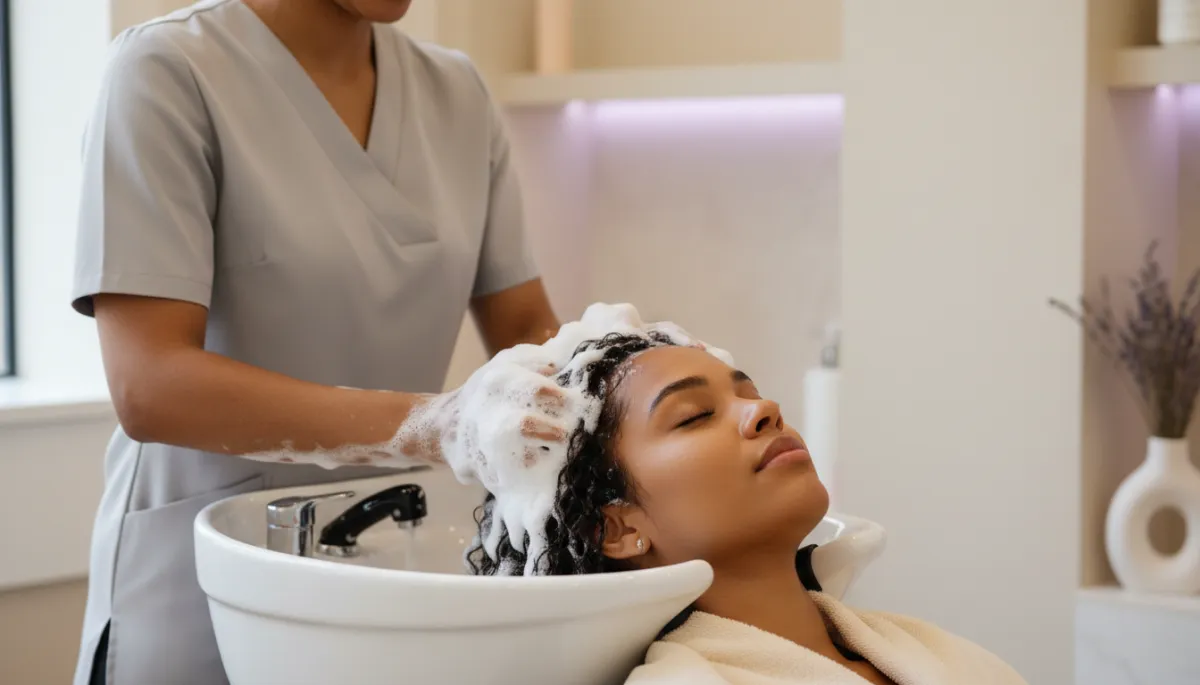
Proper cleansing removes buildup so moisturizing products can actually penetrate your coils.
2. Hydrate with Water-Based Products First, Then Seal
True moisture is water. Oils and butters are wonderful for sealing and protecting, but they do not hydrate on their own. For Type 4 hair, a typical layering approach might look like this:
Water or a water-based leave-in conditioner as your first layer on freshly washed, damp hair. Look for water (aqua) at the top of the ingredients list, along with humectants like glycerin, aloe, or panthenol that help attract and hold moisture in the hair.
Cream or lotion to add slip, softness, and additional conditioning. This step helps your coils feel smooth and flexible rather than rough or squeaky.
Light oil or butter to seal in the hydration, especially on the ends. The goal is a thin, even layer—not a heavy coating that weighs hair down or leads to buildup.
💡 Pro Tip: If your hair feels greasy but still dry, you may be over-sealing and under-hydrating. Focus on more water-based moisture and less heavy oil.
3. Deep Condition with Intention, Not Just Habit
Deep conditioning is a staple for Type 4 hair, but it works best when you choose the right type of treatment for your hair’s current needs. In general:
If your hair feels rough, stiff, or brittle, you may need a moisturizing deep conditioner with ingredients like aloe, honey, fatty alcohols (cetyl, stearyl), and plant oils in moderation.
If your hair feels weak, mushy, or overly stretchy when wet, you may benefit from a protein-containing treatment to support the hair’s structure. This is especially important if you color, relax, or frequently heat-style your hair.
For many Type 4 clients, deep conditioning every 1–2 weeks is enough. Sitting under a hooded dryer or using a heat cap can help the treatment penetrate more effectively, particularly for low-porosity hair. At Harmony Strands, we tailor the frequency and formula based on your hair’s thickness, porosity, and chemical history, so your strands receive what they actually need—not just what’s trending online.
4. Protect Your Ends: They Are the Oldest and Dryest
No matter your curl pattern, your ends have lived through the most wash days, detangling sessions, heat, and friction. They naturally feel drier and are more prone to breakage. Protecting them is one of the most effective ways to reduce dryness and maintain length. Consider:
Regular trims to remove split or frayed ends that can travel up the strand and cause more damage.
Protective and low-manipulation styles (like twists, braids without excessive tension, buns, or updos) that keep ends tucked away and reduce friction against clothing and bedding.
Targeted sealing on the ends with a slightly richer cream or oil to help them stay supple between wash days.
5. Be Gentle: Detangling and Styling Can Make or Break Your Moisture
Dryness often goes hand in hand with breakage from rough handling. Type 4 hair is delicate, especially when it’s dry or tangled. To protect your moisture and your length:
Detangle on damp, conditioned hair with plenty of slip, starting from the ends and working up in small sections.
Use your fingers, a wide-tooth comb, or a detangling brush designed for textured hair—never force knots or rush the process.
Avoid daily re-detangling from scratch. Instead, set your hair in a style that can last several days, refreshing lightly with a spray or leave-in as needed.
💡 Gentle Reminder: If your hair snaps, pops, or makes a “rubber band” sound when you detangle, it’s asking for more moisture, more slip, and more patience.
6. Protect Your Hair While You Sleep
Cotton pillowcases can absorb moisture from your hair and create friction that roughens the cuticle. Switching to a satin or silk bonnet, scarf, or pillowcase is a simple, powerful way to preserve hydration and reduce tangles and breakage. For many of our clients, this one change makes their hair feel less dry almost immediately, especially at the ends and nape area.
7. Adjust Your Routine for the Weather and Your Environment
The climate you live in affects how your hair holds moisture. In dry or cold climates, moisture evaporates more quickly from the hair, so you may need richer creams, more frequent deep conditioning, and extra protection from wind and indoor heating. In humid climates, lightweight products and anti-frizz stylers can help keep your hair hydrated without becoming puffy or sticky.
If you exercise frequently or swim, you’ll also need to consider how sweat and chlorine affect your scalp and hair. A professional consultation can help you build a routine that respects both your lifestyle and your texture instead of making you choose between the two.
8. Nourish from the Inside, Too
While products and techniques are crucial, your hair is also influenced by your overall health. Staying well-hydrated, eating a balanced diet with enough protein, healthy fats, and micronutrients, and managing stress can all support healthier hair growth. These factors won’t replace a good routine, but they will make your hair more resilient and responsive to the care you give it.
Setting Realistic Expectations: What “Moisturized” Type 4 Hair Actually Feels Like
One of the most common frustrations we hear at Harmony Strands is, “My hair still feels dry compared to my friend’s hair.” Often, that friend has a different curl pattern, a looser texture, or straight hair altogether. Comparing your coils to someone else’s strands can make you feel like you’re failing even when your hair is actually doing well for its type and history.
For Type 4 hair, “moisturized” usually means:
Strands feel supple and flexible, not stiff or crunchy, when you gently stretch a coil.
Coils maintain their shape but don’t snap easily when lightly pulled or manipulated with care.
Hair has a soft sheen or healthy, velvety look, even if it’s not glassy or ultra-shiny like straighter textures.
You experience less breakage over time, especially at the ends and edges.
Your hair may still feel different from what you see in ads or on social media and that’s okay. Healthy Type 4 hair has its own texture, movement, and touch. The goal is not to chase someone else’s version of softness, but to discover and maintain the healthiest version of your coils.
When It’s Time to Get Professional Help
If you’ve tried multiple routines, products, and techniques and your Type 4 hair still feels extremely dry, brittle, or unmanageable, it may be time to get a professional pair of eyes—and hands—on your hair. At Harmony Strands, we often uncover factors that are hard to spot on your own, such as:
Hidden breakage or thinning in certain areas (like the crown or nape)
Scalp issues that are inflamed, flaky, or overly oily beneath the dryness
Product combinations that are working against you rather than together
Overuse of protein or moisture that’s throwing your hair out of balance
A personalized consultation allows us to look at your hair’s current condition, natural texture, lifestyle, and goals and build a realistic plan. Sometimes that plan includes salon treatments to gently repair and rehydrate. Sometimes it’s about simplifying your routine and teaching you how to care for your hair at home in a way that feels sustainable instead of overwhelming.
Bringing It All Together: A Sample Routine for Dry Type 4 Hair
Every head of hair is unique, but to make this more concrete, here’s an example of a weekly routine we might recommend for a client with dry, natural Type 4 hair who doesn’t color or use frequent heat:
Weekly Wash Day
Cleanse with a gentle, moisturizing shampoo. Once every 4 to 6 weeks, swap in a clarifying shampoo to remove buildup. Follow with a moisturizing deep conditioner, using gentle heat if your hair is low-porosity. Rinse thoroughly.Post-Wash Hydration and Styling
On damp hair, apply a water-based leave-in, then a cream, then a light oil to seal. Detangle in sections and style in twists, braids, or a set style (like a twist-out) that can last several days. Focus extra product on your ends.Midweek Refresh
If hair feels dry, lightly mist with water or a leave-in spray and smooth a small amount of cream over the surface, focusing on ends. Avoid fully re-detangling unless necessary; instead, gently separate and reshape coils with your fingers.Nighttime Protection
Wear a satin or silk bonnet or scarf, or sleep on a satin pillowcase. If your hair is long, loosely pineapple, braid, or twist it to reduce tangles and friction.Monthly Maintenance
Schedule trims as needed (often every 8 to12 weeks) to remove dry, split ends. If you notice increased dryness or breakage, adjust your deep conditioning routine or book a professional treatment to rebalance moisture and strength.
This is just one example. Your ideal routine will depend on your hair’s density, porosity, length, and chemical or heat history, but the principles remain the same: cleanse, hydrate, seal, protect, and handle with care.
You Deserve Honest, Personalized Care for Your Coils
Type 4 hair is often labeled “difficult” or “unmanageable,” but the truth is that it simply requires different care and realistic expectations. When you understand why your hair naturally feels drier and how to support it instead of fighting it, you can move from frustration to partnership with your texture.
At Harmony Strands, we believe your coils, kinks, and curls deserve respect, not judgment. Our role is to offer honest guidance, professional techniques, and customized plans that honor your natural texture, whether you’re fully natural, transitioning, or caring for gray and silver coils. We won’t promise overnight miracles, but we will help you take consistent, thoughtful steps toward healthier, more hydrated hair that feels like yours, just better cared for.
📌 Key Takeaway: Your Type 4 hair feels dry not because it’s “bad hair,” but because its structure makes it harder for natural oils and moisture to travel and stay. With the right cleansing, hydrating, sealing, and protective habits, you can dramatically improve how your coils feel and behave.
Ready for a Routine Designed Just for Your Type 4 Hair?
If you’re tired of guessing, buying product after product, or feeling like your hair is always working against you, you don’t have to figure it out alone. A personalized consultation can save you time, money, and emotional energy by giving you a clear, realistic plan for your hair as it is right now, not as someone else says it should be.
Book your appointment or consultation with Harmony Strands to receive guidance and a service plan designed specifically for your hair’s current condition, natural texture, lifestyle, and goals. Together, we’ll help your Type 4 hair feel less dry, more nourished, and beautifully, confidently you.
📞 Have questions or ready to get started?
You can book directly with Harmony Strands at https://link.harmonystrands.com/booking/harmony-strands. We look forward to caring for your coils with honesty, expertise, and compassion.