
Retain Moisture in Natural Hair Without Overload
Natural Hair Care, Moisture Retention, Product Buildup
How to Keep Your Natural Hair Moisturized Without Overloading It With Products
If your hair is curly, coily, or tightly coiled, you have probably had this moment. You are standing in front of the mirror, shelves full of products behind you, layering creams, oils, and gels over and over. Your hair still feels dry, dull, and ready to break. Many of my clients at Harmony Strands in Slidell, Louisiana walk in convinced that the solution for dry natural hair is more products. In reality, excessive layering often blocks moisture instead of helping it. True moisture retention comes from a thoughtful routine, not from the largest collection of jars and bottles on the shelf.
As a licensed cosmetology educator and natural hair specialist, I see the same pattern over and over again. Dry natural hair, constant product hopping, and a lot of confusion about what actually works. The good news is that once you understand how moisture moves through your hair, we can simplify your routine, reduce buildup, and help your strands hold on to hydration for longer. In this guide, I will walk you step by step through how to keep your natural hair moisturized without overusing products, using the same principles I teach my clients at Harmony Strands.
Why Natural Hair Loses Moisture So Easily
To treat dryness correctly, we first need to understand why curly and coily hair lets go of moisture so quickly. It starts with the structure of the hair strand itself and how your natural scalp oils move along that strand.
Hair Structure and Curl Pattern
Every strand of hair has three main layers.
The cuticle is the outer layer that looks like shingles on a roof. It opens and closes to let moisture in and out of the hair.
The cortex is the middle layer that gives the hair its strength, flexibility, and curl pattern.
The medulla is the inner core. It is present in some hair and absent in others and it has less influence on moisture behavior.
In type 3 and type 4 hair, the bends and coils create a beautiful and unique shape. At the same time, those curves make it harder for moisture and natural oils to travel evenly from roots to ends. This is why your roots can feel oily while your ends feel dry and rough, especially if your hair is longer, color treated, or naturally fine and delicate.
How Natural Oils Behave in Curly and Coily Hair
Sebum is the natural oil that your scalp produces. On straight hair, this oil can glide easily down the hair shaft, which is why straight hair often looks oily quickly. On curly and coily hair, every bend slows that oil down. As a result, you often see a few common patterns.
Dry lengths and ends.
Flakes or itch on the scalp because of product buildup mixed with sebum.
A constant feeling that the only solution is to add more products to fight the dryness.
Environmental and Routine Habits That Pull Moisture Out
Even with a healthy routine, your environment can quietly pull moisture away from your strands. Here in Slidell and the surrounding areas in Louisiana, we deal with high humidity, heat, and hard water in many homes. Several everyday factors can strip moisture from your hair.
Heat tools such as flat irons, high heat blow drying, and curling tools can weaken the cuticle and cause water to evaporate quickly from the hair shaft.
Hard water that is high in minerals can leave a film on the hair. The hair then feels rough and it becomes harder for moisture to penetrate. Over time this often leads to chronic dryness and a dull appearance.
Sun exposure which can weaken and dry the cuticle, especially on color treated or lightened hair.
Indoor heating and air conditioning which pull moisture out of the air and out of your hair, so your hair feels brittle in both winter and summer.
Changes in humidity. High humidity can cause swelling and frizz, while low humidity can leave the hair tight, dry, and prone to breakage.
Hair Porosity and How Moisture Moves
Porosity describes how easily your hair absorbs and releases water. It is not tied to curl pattern. It is related to the condition of the cuticle layer. Understanding your porosity helps you choose products and routines that support moisture retention without heavy product overload.
Low porosity hair has a cuticle that lies very flat and tightly closed. Water and products tend to sit on the surface instead of soaking in. This hair can take a long time to get fully wet and then dries very slowly if it is loaded with product.
High porosity hair has a more open cuticle, sometimes from genetics and sometimes from color, lightening, or previous damage. It absorbs water quickly but loses it quickly as well. That often leads to dryness and frizz if the hair is not supported and reinforced correctly.
No matter if your hair is low, medium, or high porosity, the goal stays the same. We want to let water in, support the cuticle, and reduce unnecessary moisture loss, while avoiding suffocating the strand with heavy layers of product.
Signs You Are Using Too Much Product
One of the most common sentences I hear at Harmony Strands is, “My hair never feels moisturized no matter what I put on it.” Many times the issue is not that you are using too little. The problem is the amount, how often you apply, or the order of your steps. There are clear signs that your hair is struggling with buildup instead of enjoying true moisture retention.
Your hair feels tacky, waxy, or sticky to the touch even after it dries.
Your curls feel heavy and droopy instead of light, bouncy, and flexible.
Drying time is extremely long even in a warm room or under a hooded dryer, because layers of product are holding water on the surface instead of letting it evaporate naturally.
You see white flakes or little balls on the hair when you touch or move it. This is often dried product clumping on the surface, not scalp dandruff.
Your strands feel coated on the outside but still dry inside, as if something is sitting on top while the hair underneath feels rough and breakable.
You lose curl definition and see puffiness or frizz even though you used gel, cream, and oil.
When you wet your hair, the water beads up on the surface instead of soaking in right away.
Product buildup acts like a raincoat wrapped around the strand. It blocks water, conditioner, and treatments from reaching the cortex, which is where real moisture lives. This is why I spend so much time teaching my clients how to keep natural hair moisturized without overusing products. Once we remove that barrier, the products you already own can start to work more effectively.
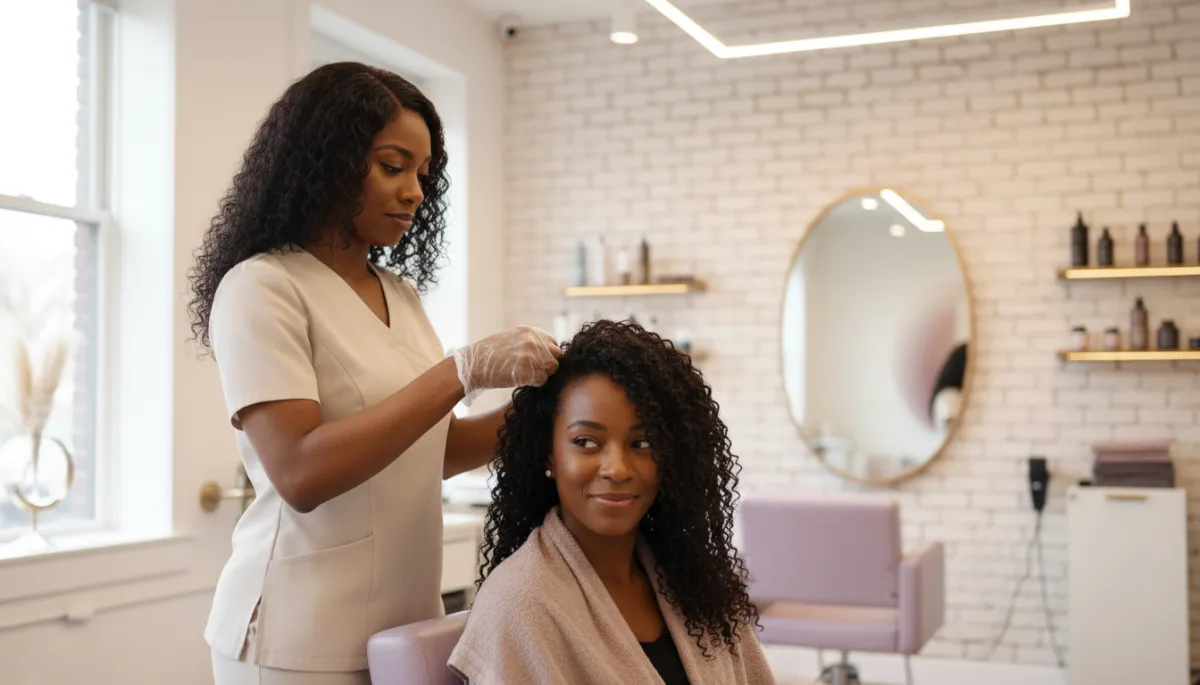
Reducing buildup reveals softer, more defined curls without heavy product layers.
Moisture Starts With Clean Hair
A big misconception in curly hair care is that shampoo is the enemy. In reality, clean hair holds moisture much better than hair that is coated in oils and products. If your scalp and strands are covered in layers of product, oils, sweat, and environmental debris, your conditioner and deep treatments cannot penetrate effectively. You end up adding more layers every wash day and still chasing softness that does not last.
Why Shampoo Is Essential for Moisture Retention
A healthy cleansing routine supports moisture retention in natural hair in several practical ways.
It removes buildup. A gentle sulfate free shampoo or a properly used clarifying shampoo lifts waxes, heavy oils, and old product residue that block moisture from entering the hair shaft.
It prepares the cuticle. Clean hair allows conditioner and deep treatments to coat the strand more evenly. Slip, softness, and strength improve in the areas that need it most.
It supports scalp health. A clean scalp is less likely to itch, flake, or become inflamed. Healthy follicles create a better environment for stronger hair that can hold on to length over time.
If you have been relying only on cleansing conditioners for long stretches, or stretching wash days for weeks while adding new products on top of old ones, I encourage you to reset your routine. At Harmony Strands, I often start new clients with a deep cleanse and a professional conditioning treatment before we even discuss styling. If you would like to understand cleansing in more detail, I recommend reading our article Clean Hair Is Part of Healthy Hair and visiting the Scalp Health section for additional guidance.
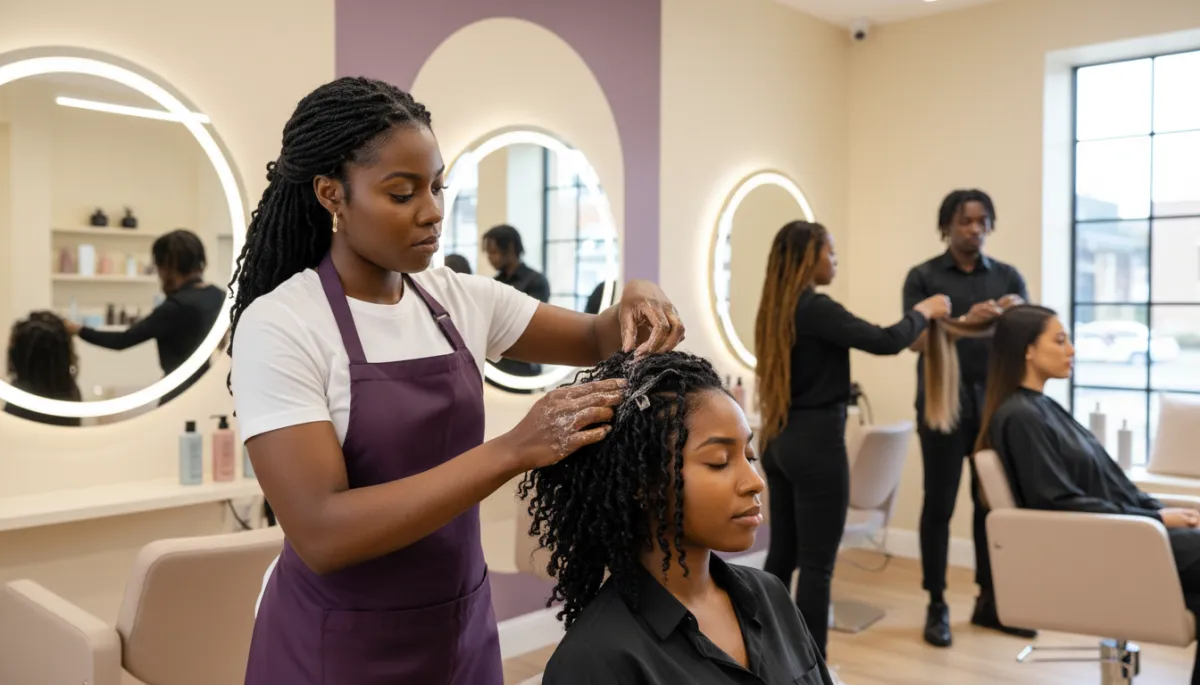
Proper cleansing is the first step toward soft moisture that lasts longer.
Water Is Your Hair’s First Moisturizer
Any honest conversation about how to keep natural hair moisturized without overusing products has to start with one simple truth. Water is the first and most important moisturizer for your hair. Everything else, such as conditioner, creams, and oils, either helps water get into the strand or helps your hair hold on to that water for a longer period of time.
Internal Moisture Versus Sealing and Coating
Internal moisture means that water has actually entered the hair shaft. This happens when you wet your hair in the shower and when you use water based products such as rinse out conditioners and leave in conditioners. Hair that is moisturized from the inside bends more easily, breaks less, and can hold its curl pattern without the ends snapping or splitting as quickly.
Sealing or coating means slowing down how fast that water escapes. Oils, butters, and some creams form a light layer over the cuticle so moisture does not evaporate as quickly. This step does not moisturize by itself. It helps your hair hold on to the water it already received.
How Conditioners, Oils, and Creams Work Together
A balanced moisture routine for curls and coils usually includes a few key product types that support one another.
Rinse out conditioner improves slip and softens the cuticle. It adds moisturizing ingredients that help the hair hold water and resist breakage while you detangle.
Leave in conditioner is lighter in weight and texture. It stays on the hair to provide ongoing moisture support and to help define curls throughout the day or week.
Creams are often thicker than leave ins and offer additional moisture and control, especially for dense hair or high porosity hair. These work best when they are water based rather than pure oils.
Light oils and butters are used sparingly. They help seal in moisture, add shine, and reduce friction between strands. They work best on damp hair that already contains water and conditioner.
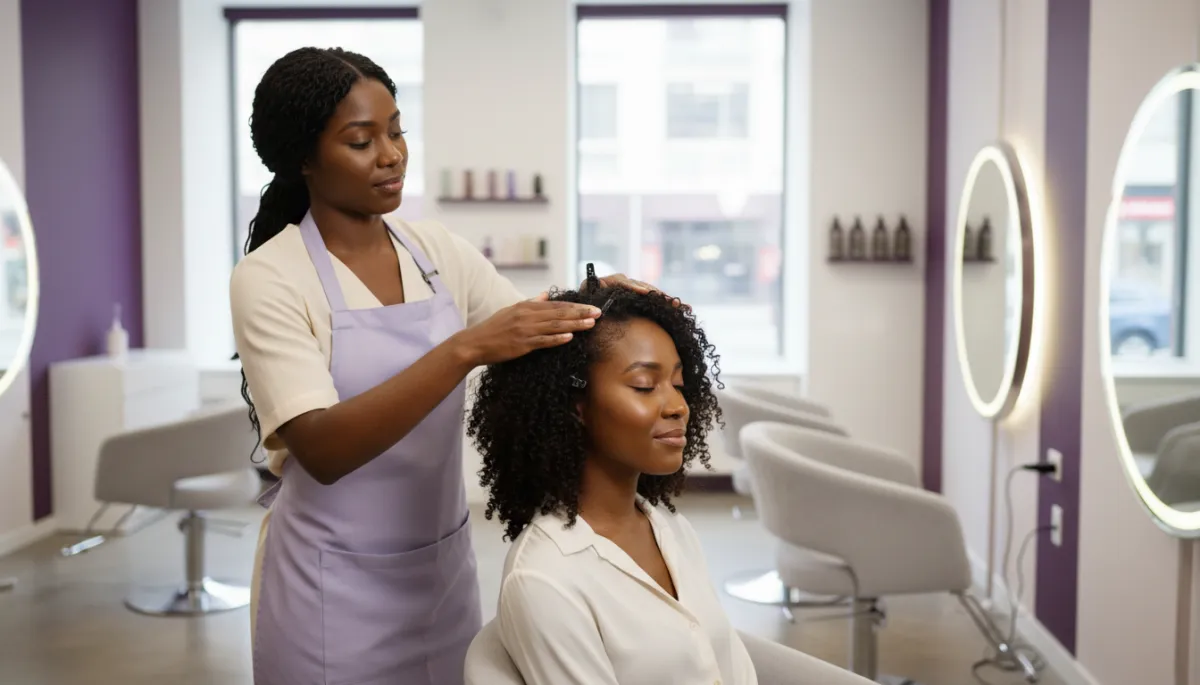
Water hydrates first, then conditioners and oils help your hair hold on to it longer.
A Simple Moisture Routine Without Exhausting Daily Layering
You do not need a ten step routine for your natural hair to stay moisturized. In fact, with many of my clients, especially those with type 4 hair who struggle with dryness, simplifying the routine often gives clearer and more beautiful results. Here is a practical, healthy routine that you can adjust to your hair type and daily life.
1. Cleanse Your Hair Regularly
For most people with curls and coils, washing every seven to ten days works well for everyday needs. If you use heavy styling products, work out often, or live in a very humid climate, you may need to cleanse a bit more frequently. Use a gentle sulfate free shampoo for most wash days and add a clarifying shampoo about once a month or as needed to remove stubborn buildup. For more detailed guidance, you can read our article How Often Should You Wash Type 4 Hair.
2. Condition and Detangle Gently
After shampooing, apply your rinse out conditioner in sections. Focus on the mid lengths and ends. Begin detangling with your fingers or a wide tooth comb, starting from the ends and working upward. Rinse thoroughly so your hair feels soft but not slimy or coated. Over time, this step reduces single strand knots, tangles, and breakage. You can learn more in our article How to Prevent Single Strand Knots.
3. Apply Leave In on Damp, Not Dripping Wet, Hair
After blotting with a towel or cotton T shirt until your hair stops dripping, apply a water based leave in conditioner. This product is the foundation of moisture retention for natural hair. Start with a reasonable amount, work in sections, and only add more if your hair truly needs it. For fine or low density hair, lighter formulas usually work better so the hair does not look greasy or weighed down.
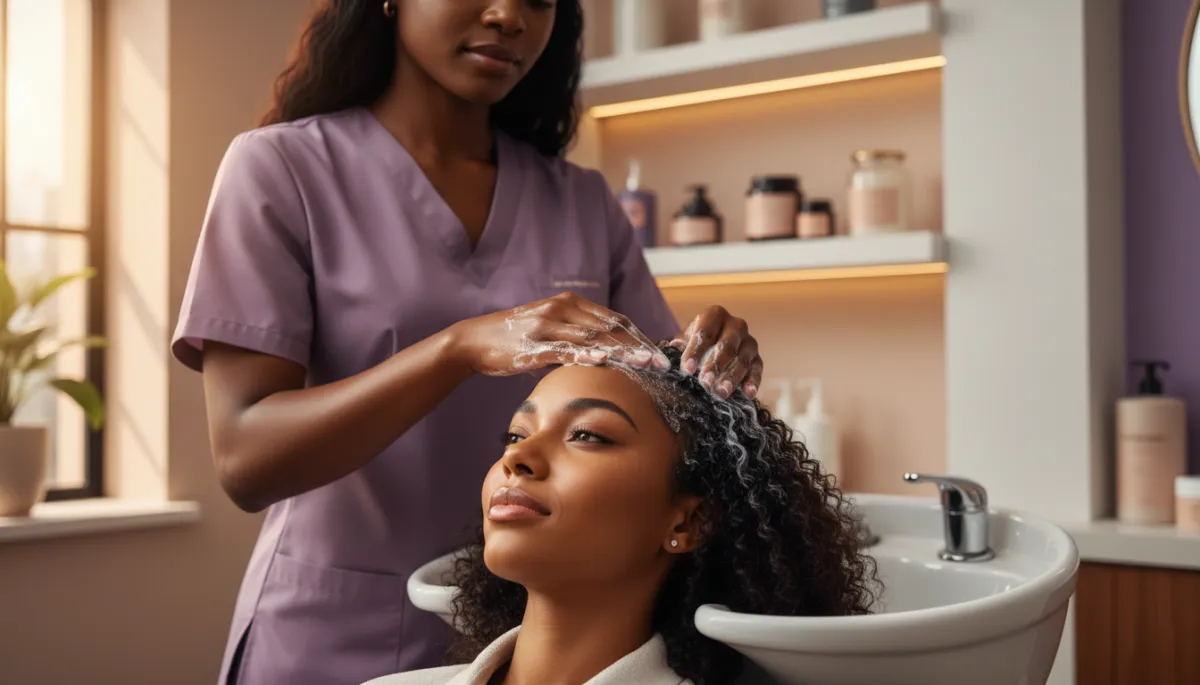
A balanced leave in on damp hair supports definition and longer lasting softness.
4. Add Cream If Needed, Then Seal With a Light Oil
If your hair is very dense, highly porous, or dries quickly, you can add a curl cream or moisturizing cream on top of your leave in. Again, be moderate with the amount. Focus on the ends and any areas that dry out faster than the rest. To finish, use a small amount of oil or a butter based product that you have warmed between your palms to create a light seal, especially on type 4 hair and high porosity strands. This final step helps lock in moisture without forming a heavy shell around the hair.
5. Protect Your Hair While You Sleep
A lot of moisture loss happens overnight because of friction and cotton pillowcases. To protect your curls and coils, I recommend a few simple habits.
Sleep on a silk or satin pillowcase or wear a soft bonnet or scarf.
Put your hair in loose braids, twists, or a high “pineapple” to reduce tangling and knots.
6. Avoid Adding Heavy Products Every Single Day
Instead of applying cream and oil every day, try refreshing with a light mist of water or a diluted leave in mixture on non wash days. This approach supports moisture in natural hair without building thick layers of product. If you notice that you are adding several products every day just to make your hair feel soft, it usually means your core routine needs adjusting or it is time for a thorough cleanse. You can read our article Why Natural Hair Feels Dry Even After Moisturizing for a deeper explanation of this pattern.
Ingredients That Truly Support Moisture
Reading ingredient lists can feel overwhelming, but you do not have to memorize every name. It is enough to focus on a few key ingredients that genuinely support moisture retention in natural hair without causing excessive buildup.
Glycerin, a humectant that attracts moisture toward the hair. In balanced formulas, it helps hair stay soft and hydrated. In very dry climates it may pull moisture from the hair itself, so it is important to watch how your hair responds from season to season.
Aloe vera, which offers light hydration and soothing benefits for the scalp. Aloe based products often improve slip, softness, and scalp comfort without feeling heavy.
Panthenol (vitamin B5), which helps the hair hold on to water and gives it a fuller, smoother feel. You will find this ingredient in many quality conditioners and leave ins that support natural hair moisture.
Honey, a natural humectant that attracts and holds moisture. It is often used in deep conditioning masks to boost softness and shine. A little goes a long way, especially on fine hair.
Fatty alcohols such as cetyl alcohol, stearyl alcohol, and cetearyl alcohol. These are not drying alcohols. They are creamy, conditioning ingredients that add slip and softness and help blend oils with water inside the product. They support smooth, manageable curls and coils.
Shea butter, a rich, nourishing butter that helps seal in moisture and protect the cuticle. It works best in balanced formulas or in small amounts, especially on fine or low porosity hair, so it does not feel too heavy.
Avocado oil, a nutrient rich oil that can penetrate the hair shaft to some degree. It supports softness and flexibility, especially for dry or high porosity hair.
Jojoba oil, which is similar to the scalp’s natural sebum. It is excellent for scalp care and for light sealing without a greasy feel. It suits many porosity types when used in moderation.
Argan oil, a lighter oil that adds shine and helps reduce frizz. It works well on looser curls in small amounts and makes a nice finishing oil for many styles.
When you are choosing the best products for dry natural hair, look for water as one of the first ingredients, paired with a mix of these moisturizing and conditioning components. At Harmony Strands, I help clients choose products that match their hair’s porosity, density, and lifestyle so they can build a realistic routine that they can maintain.
Ingredients That Can Cause Buildup If Overused
Some ingredients are not “bad” on their own, but they can create problems if you use them in large amounts, skip proper cleansing, or apply them on hair that is not suited to them. A few common examples include the following.
Heavy waxes that give strong hold and shine but can form a stubborn coating on the hair. Without regular clarifying, this layer can block moisture, dull the hair, and lead to flakes.
Rich butters in large amounts such as shea, cocoa, and mango butter. These can be very helpful when used in moderation, but formulas that contain a high percentage of these butters can suffocate fine or low porosity hair. The hair then looks limp and greasy while remaining dry inside.
Mineral oil, which acts as a strong barrier that can lock in moisture, but can also lock in dryness if it is applied to hair that is not well hydrated first. It requires thorough cleansing to remove completely from the hair and scalp.
Petrolatum (petroleum jelly), which behaves similarly to mineral oil as a strong barrier. It can be useful for some protective styles, but frequent use without proper shampooing leads to obvious buildup. On fine hair, it usually feels very heavy and greasy.
Heavy silicones such as dimethicone and amodimethicone. These can smooth the cuticle, reduce frizz, and add great slip. The problem appears when they are used repeatedly without clarifying. They leave a coated feel and reduce the hair’s ability to absorb moisture over time.
These ingredients are not automatically wrong. What matters is balance and proper removal. If you love a product that contains some of these, simply make sure you wash your hair regularly and include a clarifying shampoo when needed. That way your hair keeps its ability to absorb water and conditioner effectively.
Moisture Strategies for Low Porosity and High Porosity Hair
Your hair’s porosity affects how easily it absorbs moisture and how well it holds onto it. Understanding this can help you choose the right products, avoid unnecessary layering, and build a routine that keeps your hair soft without causing buildup.
Low porosity hair has tightly packed cuticles, so water and products may sit on the surface before absorbing. High porosity hair has more open cuticles, which allows moisture to enter quickly but also escape more quickly.
Low Porosity Hair
Low porosity hair usually responds best to lightweight, water based products. Milky leave in conditioners and light moisturizers can help hydrate the hair without coating it. Heavy butters and thick oils should be used sparingly because they may sit on the surface and make the hair feel greasy or stiff.
Focus on giving the hair a thorough moisture treatment on wash day, then refresh lightly only when needed. Gentle heat or steam during deep conditioning may help the hair absorb moisture more effectively. Regular clarifying is also important because buildup can make it even harder for water to reach the strand.
High Porosity Hair
High porosity hair absorbs water quickly, but it may lose moisture just as fast. It may dry quickly, feel rough, become frizzy, or need more frequent moisture support.
This hair type often benefits from layering a water based leave in with a richer cream, light oil, or soft butter. Applying a sealing product to the ends can help slow moisture loss. Deep conditioning treatments that include a balance of moisture, protein, and nourishing oils may also help strengthen the hair and improve manageability.
High porosity hair may need more frequent moisture refreshes than low porosity hair, especially in dry weather or after heat styling. Clarifying should still be done as needed, particularly when heavier products are used, followed by a moisturizing conditioner.
The goal is not to use as many products as possible. The goal is to choose the right amount and texture of product for the way your hair absorbs and releases moisture.
If you are unsure about your hair’s porosity, a Natural Hair Consultation at Harmony Strands Hair Studio in Slidell, Louisiana can help you better understand your hair and create a moisture routine that fits your texture, lifestyle, and healthy hair goals.
Moisture Myths That Keep Natural Hair Dry
I hear certain beliefs again and again in the salon. Many of them lead to product overload and ongoing dryness. Let us correct some of the most common myths together so you can make more confident choices at home.
“I Need Oil Every Single Day”
Daily oil use can create buildup very quickly, especially on low porosity or fine hair. Remember that oil is meant for sealing, not for internal hydration. If your hair looks dry every day, the solution usually lies in improving moisture on wash day and using an effective leave in, not in adding new layers of oil over dryness.
“More Product Means More Moisture”
Once your hair has absorbed what it needs, the extra product simply sits on the surface. That leads to sticky strands, flakes, and a dull look. A planned routine with suitable products in measured amounts gives far better results than a crowded shelf full of products that are used randomly.
“Natural Hair Should Never Be Washed With Shampoo”
This is one of the most damaging beliefs I run into. Cleansing conditioners alone cannot remove heavy oils, waxes, and environmental buildup. Over time, skipping shampoo suffocates both the scalp and the hair shaft. That leads to dryness, irritation, and breakage. What truly matters is choosing the right type of shampoo and the right wash frequency instead of avoiding cleansing altogether. Our article Common Hair Care Mistakes That Cause Breakage explains this in more detail.
“If My Hair Looks Oily, It Must Be Moisturized”
A greasy feel does not always mean your hair is hydrated inside. Your hair can be covered in layers of oils and butters while the inner structure stays dry if water and conditioner never truly reach it. Moisturized natural hair feels soft, flexible, and moves easily. It does not feel heavy, slippery, or sticky.
“Expensive Products Always Give Better Results”
Price alone does not guarantee performance. A mid priced product with suitable ingredients, used correctly, can outperform a luxury product that does not match your hair’s needs. At Harmony Strands, I focus on fit and technique more than price. My goal is to help you build a realistic routine with products that make sense for your budget and your current hair condition.
Professional Tips From Harmony Strands for Longer Lasting Moisture
Through my work with clients who have a wide range of type 3 and type 4 textures, transitioning hair, and color treated natural hair, I see firsthand what truly supports moisture retention. Here are some salon tested tips that I share often.
Use protective styles wisely. Twists, braids, and simple updos reduce daily manipulation and help your hair stay moisturized for longer. It is important to start with clean, well moisturized hair and to avoid excessive tension or leaving the style in for too long. You can explore our Protective Styling section for ideas and guidelines.
Commit to regular trims. Rough, split ends do not hold moisture well and tend to tangle and knot. A professional trim every eight to twelve weeks, depending on your hair and goals, helps your hair look and feel healthier from roots to ends. You can book our Professional Hair Trim service to support this habit.
Prioritize scalp health. A balanced scalp helps natural oils distribute more effectively and supports overall hair health. If you struggle with flakes, itching, or sensitivity, consider booking a Scalp Treatment and explore our Scalp Health resources.
Choose products based on your hair, not on trends. A product that works beautifully for someone online may not suit your porosity, density, or climate. Working with a licensed cosmetologist who understands natural hair can save you time, money, and frustration by narrowing down the best products for your dry natural hair instead of guessing and constantly adding more layers.
Invest in professional deep conditioning when needed. At home masks are helpful, but a salon Deep Conditioning Treatment with controlled heat, careful sectioning, and the right product choice can create a noticeable difference, especially for high porosity, color treated, or chronically dry hair.
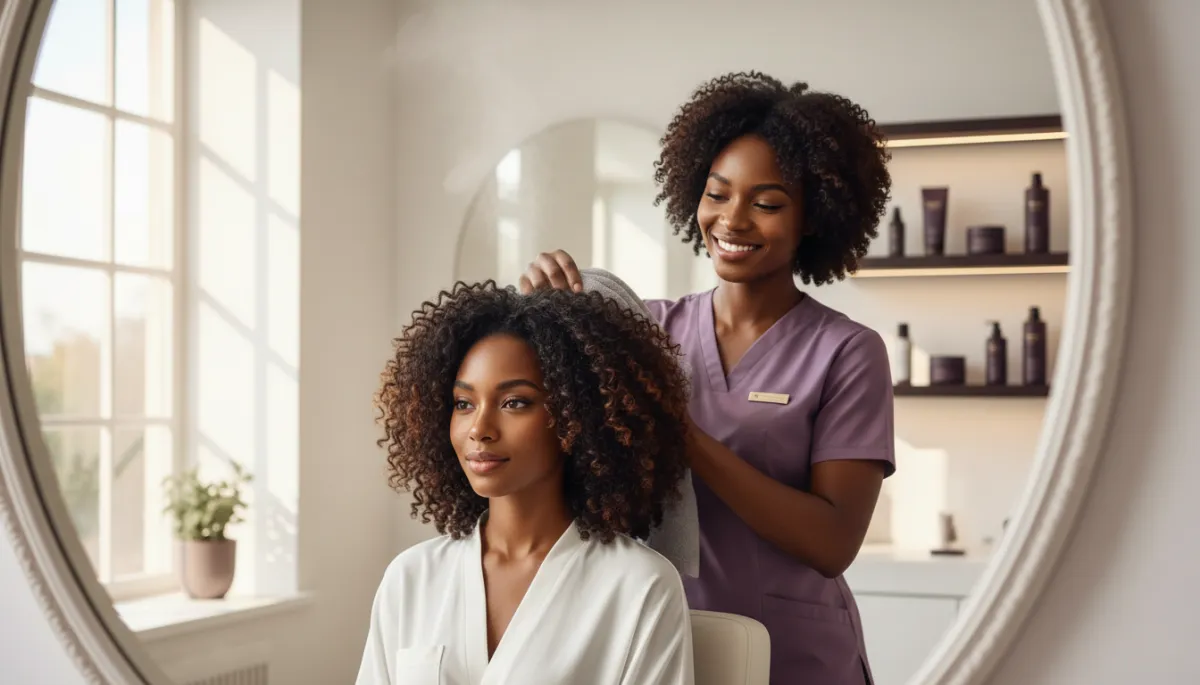
Targeted deep conditioning can revive dry curls and support a healthier long term routine.
When It Is Time to Book a Professional Moisture Treatment
Even with consistent home care, your hair sometimes needs a professional reset. I recommend booking a Natural Hair Consultation or a Healthy Hair Assessment & Care Plan at Harmony Strands in Slidell, Louisiana if you notice any of the following signs.
Persistent dryness where your hair feels rough and fragile even though you use conditioner and leave in regularly.
Ongoing breakage with short pieces of hair on the sink, floor, or your clothes, especially during detangling or styling. I always want to be honest with my clients, so I never promise a specific length, but I can absolutely help reduce breakage and support better length retention where possible.
Color treated hair because lightened or colored strands need extra support to maintain moisture and strength. A customized treatment plan can make a big difference in how your color looks and how long it lasts.
Heat damage or frequent heat styling. If you enjoy silk presses or regular heat styling, professional support helps you balance a smooth look with long term hair health. Our Silk Press services are designed with the health of curly and natural hair in mind.
Seasonal dryness caused by weather changes, indoor heating, or shifts in humidity that affect how well your hair holds moisture. A seasonal reset appointment helps your routine adjust to those changes.
Product fatigue and confusion. If you feel exhausted from constant trial and error, changing brands, and not seeing results, working with a licensed natural hair professional can save you time, money, and stress by creating a realistic, personalized plan for you.
Protective styles work best on clean, moisturized hair with regularly maintained ends.
Frequently Asked Questions About Moisture Retention Without Product Overload
Here I answer some of the most common questions I hear in the salon about how to keep natural hair moisturized without overusing products. My goal is to give you clear, practical answers that you can apply right away.
1. How Do I Keep My Natural Hair Moisturized?
Start with clean hair, then give it enough water and conditioner. Apply a water based leave in on damp, not dripping, hair. Add a light cream or simple oil for sealing when needed. Protect your hair at night and avoid adding heavy products every single day. A simple, consistent routine usually outperforms constant changes and multiple daily layers.
2. Why Does My Natural Hair Still Feel Dry After Moisturizing?
Common reasons include product buildup that blocks moisture, infrequent cleansing, products that are too heavy or too light for your porosity, skipping leave in, or not sealing properly. In some cases, rough, split ends are part of the problem and need to be trimmed. Our article Why Natural Hair Feels Dry Even After Moisturizing breaks down these causes in more detail.
3. Can Using Too Many Products Make Natural Hair Drier?
Yes, it can. Excess product can create a barrier that stops water and conditioner from reaching the hair shaft. Over time, the hair becomes coated and dull while remaining dry on the inside. This is one of the main reasons I emphasize learning how to keep natural hair moisturized without product overload. A lighter, smarter routine protects your hair in the long term.
4. How Often Should Type 4 Hair Be Moisturized?
Many people with type 4 hair do well with a full routine once a week on wash day. That routine usually includes shampoo, conditioner, leave in, and possibly a cream and light oil for sealing. Between wash days, you can refresh with a light water mist or a diluted leave in mix when needed. If you find yourself applying heavy products every day, that is a sign to reassess your routine or schedule a clarifying cleanse.
5. Do I Need to Use Oil Every Day on My Natural Hair?
Most people do not need daily oil. A small amount on wash day, plus tiny touch ups on the ends when truly needed, is usually enough, especially if you are using an effective leave in and cream. Daily oiling often leads to buildup and scalp stress. Focus on water and conditioner first, then use oil as a finishing step when your hair genuinely calls for it.
6. Which Products Actually Moisturize Hair?
Products that list water as a main ingredient, along with humectants like glycerin, aloe vera, and honey, conditioning agents like panthenol and fatty alcohols, and balanced lipids such as shea butter or plant oils, are the ones that truly support moisture. Oils on their own do not hydrate the hair. They help seal in the moisture you already created with water and conditioner.
7. What Causes Product Buildup on Natural Hair?
Buildup can come from heavy oils, waxes, silicones, butters, and styling products, along with minerals from hard water, sweat, and environmental debris. Infrequent shampooing, relying only on cleansing conditioners, and continuously adding new layers of product without clarifying all contribute to this issue. If your hair never feels completely clean or takes a long time to get fully wet, buildup is often part of the reason.
8. How Do I Know If My Hair Needs a Clarifying Shampoo?
Warning signs include dull color, loss of curl definition, a waxy or sticky feel, the sense that your products “stopped working,” and water that beads on the surface instead of soaking in. If you notice several of these at the same time, it is usually a good time to clarify, follow with a nourishing conditioner, and then return to your regular moisture routine.