
Prevent Single-Strand Knots in Natural Hair
Hair Growth & Length Retention, Natural Hair Care, Breakage Prevention
How to Prevent Single-Strand Knots in Natural Hair
Tiny knots at the very ends of your curls can feel harmless at first. Then they start catching on everything, tangling with neighboring strands, and snapping off when you try to detangle. Those tiny tangles are called single-strand knots, often nicknamed fairy knots, and they are one of the most common causes of breakage and poor length retention in curly and coily hair.
As a licensed cosmetologist and natural hair specialist at Harmony Strands Hair Studio in Slidell, Louisiana, I see single-strand knots every single week. Many clients come in worried that their hair is not growing, when the real issue is that their ends are breaking faster than their hair can retain length. Those tiny knots are often a big part of the problem.
In this guide, I will walk you through what single-strand knots are, why they form, how they lead to breakage, and most importantly, how to prevent single-strand knots so you can protect your ends and support healthier length retention over time. The goal is not overnight growth. The goal is stronger, healthier hair that keeps the length you work so hard for.
What Are Single-Strand Knots?
A single-strand knot is exactly what it sounds like. One individual hair strand loops around itself and forms a tiny knot. You can usually feel them when you slide your fingers down your hair and notice a little bump near the very end of the strand. Sometimes you can see them as tiny balls at the tips of your curls or coils. They are often called fairy knots because they are so small that it feels like a fairy tied them there overnight.
Curly and coily hair is naturally more prone to fairy knots. The tighter the curl pattern, the more the strand bends and twists along its length. Type 3 curls, Type 4A, 4B, and 4C coils all have some degree of bend. Each bend is a potential point for the hair to loop around itself, especially when the hair is dry, rough at the ends, or allowed to rub against clothing, pillows, and other strands for long periods of time.
Think of a smooth ribbon compared to a piece of thread. A straight ribbon usually glides past itself. A coiled thread can twist and tangle. Your curls behave in a similar way. When your hair is hydrated, smoothed, and protected, it can still form knots, but far fewer. When it is dry and frayed, those knots show up often and quickly turn into breakage and split ends.
Single-Strand Knots vs. Split Ends
It is important to understand the difference between a single-strand knot and a split end. A single-strand knot is a knot tied in one strand of hair. A split end is when the end of the hair shaft splits into two or more pieces. You can have both at the same time. For example, a strand can have a knot near the end, and the end of that same strand can also be split and frayed. Both are signs that the hair needs attention and likely a trim.
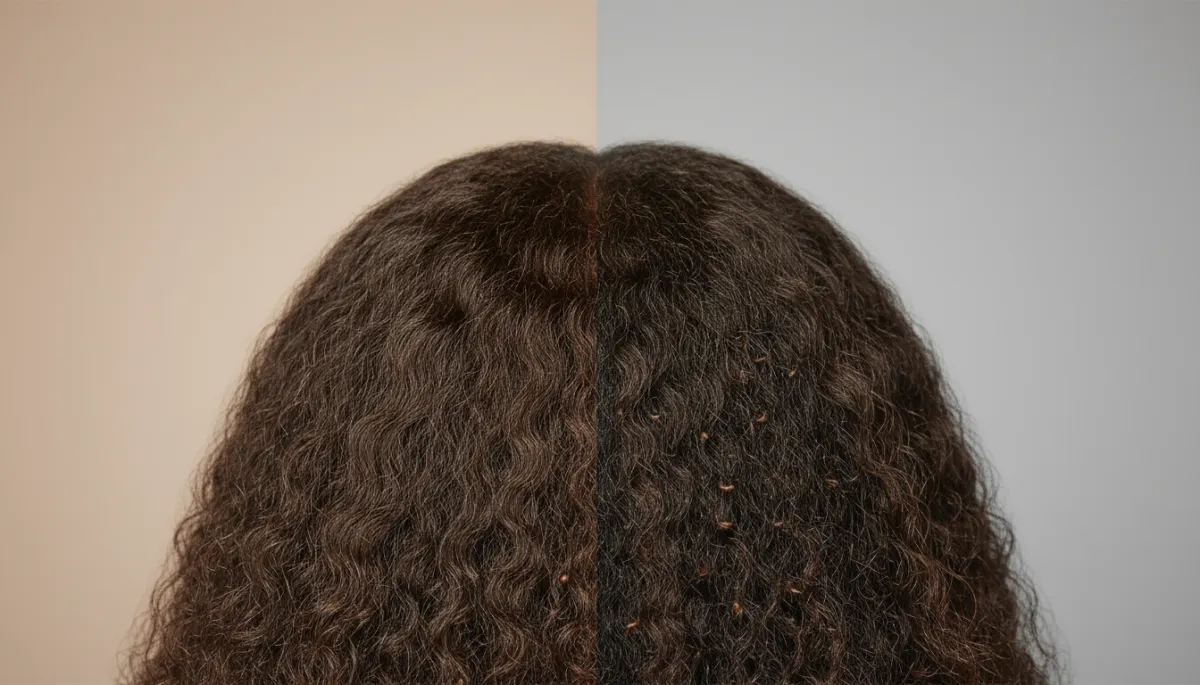
Healthy, freshly trimmed ends are smoother and less likely to form fairy knots and breakage.
What Causes Single-Strand Knots?
Single-strand knots can show up even on healthy hair, especially with very tight coils. However, certain habits and conditions make them appear more often and make them harder to manage. If you want to prevent single-strand knots, you need to understand what encourages them in the first place.
Dry Hair and Lack of Moisture
Dry hair is one of the biggest contributors to fairy knots. When the hair cuticle is rough, lifted, and dehydrated, the strands grip onto each other instead of gliding. For Type 3 and Type 4 hair, moisture retention is already a challenge because the bends in the hair make it harder for natural oils from the scalp to travel all the way to the ends. If your routine does not support consistent moisture, those ends become rough and knot-prone very quickly.
Skipping Trims and Damaged Ends
When you go too long without trimming natural hair, the oldest part of your hair, the ends, start to fray. Split ends, weathering, and tiny cracks along the shaft create rough areas that catch on nearby strands. Damaged ends behave like Velcro. They cling to everything and make tangles and knots more likely. Many clients are afraid to trim because they want to keep their length, but regular trims are one of the most effective ways to prevent single-strand knots and support long-term length retention.
Excessive Manipulation and Wearing Hair Loose Too Often
Constant styling, brushing, and redoing your hair can create more opportunities for the strands to loop and knot. Wearing your hair loose every single day, especially if it is shoulder length or longer, also increases friction. Your ends rub against your clothes, your purse strap, your car seat, and your pillow. All of that contact encourages tangling and fairy knots, particularly on fine or highly textured strands.
Wind, Sleeping Without Protection, and Rough Handling
Wind can whip your curls around and twist them into tight little knots. Sleeping without a satin bonnet, silk scarf, or satin pillowcase allows your hair to rub against cotton sheets and pillowcases, which pull moisture out of your strands and create friction. Rough detangling, brushing dry hair, or yanking through tangles with a comb can tighten existing knots and create new ones, which leads to breakage and frustration on wash day.
Heat Damage and Product Buildup
Repeated high heat from flat irons, curling tools, or blow dryers can weaken the cuticle, change your curl pattern, and create rough, fragile ends. Those weakened areas knot easily and then break. Heavy product buildup from gels, creams, oils, and butters that are not fully cleansed can also cause the hair to feel coated and stiff. Stiff hair does not move and separate as easily, so it can lock into knots and tangles instead of gliding apart. Clean, balanced hair responds much better to detangling and styling.
Why Single-Strand Knots Lead to Breakage
A single-strand knot might look tiny, but it creates a weak point in the hair shaft. When that knot slides up or catches on other strands, it can cause a chain reaction of tangles, split ends, and snapping. Over time, this constant breakage at the ends is a major reason many people feel like their hair is not growing, even though the hair at the root is growing just fine.
Hair fibers catch together. Knotted strands hook onto neighboring hairs. When you detangle, several hairs are pulled through that tiny knot at once, which stresses the hair and often leads to breakage.
Weak points form in the shaft. Anywhere the strand is knotted, bent sharply, or frayed becomes more fragile. With time, that weak spot can split or snap.
Ends split and fray. A knot near the end of the hair can cause the tip to split, which then travels upward if it is not trimmed. This is one way damage slowly moves up the hair shaft.
Reduced length retention. Every time a knotted end snaps off, you lose a little length. Over months and years, that constant breakage can make it feel like your hair is stuck at the same length, even if it is technically growing at the roots.
📌 Key Takeaway: Preventing single-strand knots is not about perfection. It is about reducing how often they form so you can protect your ends, lower breakage, and support better length retention over time.
How to Prevent Single-Strand Knots
You will never prevent every single knot, especially if you have tight coils. The goal is to reduce fairy knots as much as possible and keep your ends in the best condition you can. At Harmony Strands, we focus on simple, consistent habits that protect your hair instead of quick fixes. Here is how to prevent single-strand knots in a realistic, sustainable way.
Keep Hair Moisturized
Moisture is your first line of defense against fairy knots. Hydrated hair has more flexibility. It bends and stretches more easily without snapping, and the cuticle lies flatter, which helps strands glide past one another instead of gripping and knotting. For Type 3 and Type 4 hair, moisture retention is often more important than how often you add product. You want hydrated hair that is not weighed down or coated.
Use a gentle, moisturizing cleanser or co-wash that does not completely strip your hair.
Deep condition regularly, especially if your hair feels dry, brittle, or rough at the ends.
Apply leave-in conditioner and a sealant suitable for your porosity. Lighter products often work better for low porosity hair, while richer creams or butters may benefit high porosity hair.
If you want more guidance on balancing moisture without overloading your hair with products, explore our article How to Retain Moisture in Natural Hair Without Product Overload on the Harmony Strands blog. It breaks down how to build a moisture routine that fits your texture and lifestyle.
Trim Damaged Ends Regularly
Regular trims are one of the most effective ways to prevent single-strand knots. When the ends of your hair are blunt, smooth, and free of splits, they are far less likely to tangle around themselves or grab onto other strands. Trimming is preventive, not a punishment. You are not losing length. You are removing damage so your hair can keep the length you gain in the future.
Trimming vs. cutting. A trim removes a small, consistent amount from the ends to maintain health. A cut reshapes the hair or removes a significant amount of damage. Most clients only need trims, not big chops, once their hair is on a healthy schedule.
Signs you need a trim. Persistent single-strand knots, rough or frayed ends, visible split ends, thinning at the bottom of your hair, or detangling that feels harder than usual are all signs that it is time to schedule a trim.
If you are not sure how often you should be trimming natural hair, visit our Haircuts & Trims category for more education. At Harmony Strands, we typically recommend trims every 8 to 12 weeks, depending on your hair’s condition, how you style it, and your length retention goals.
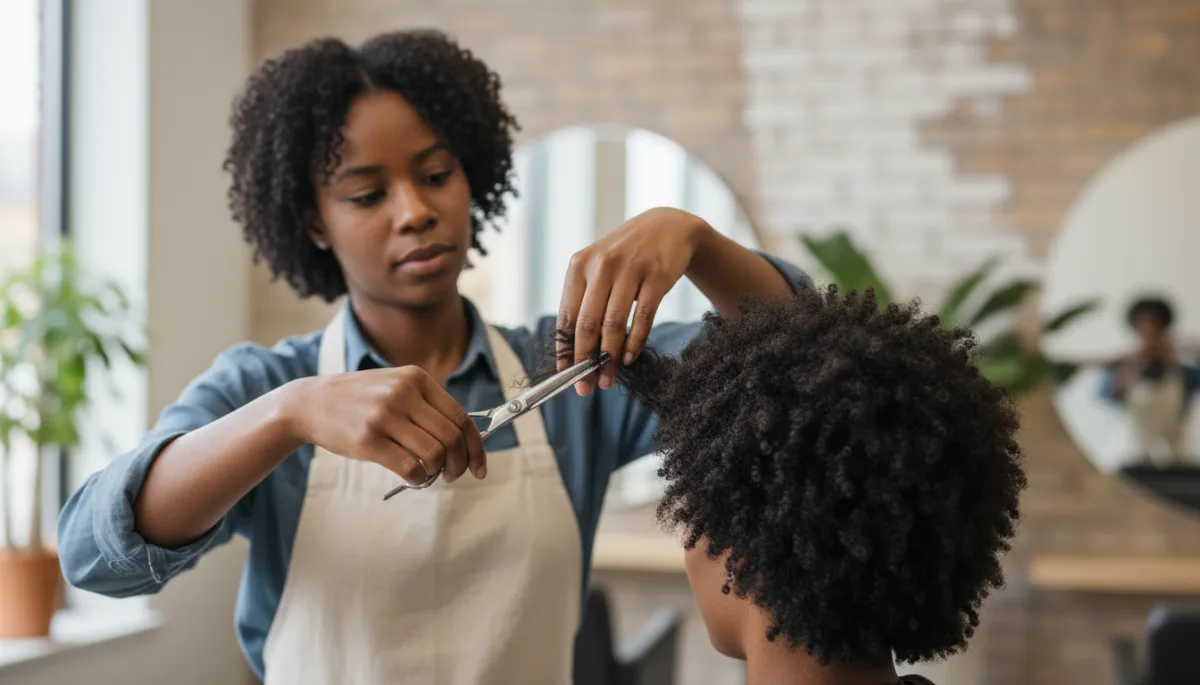
Consistent professional trims remove damaged ends before they turn into stubborn knots and breakage.
Wear Protective Styles and Low-Manipulation Styles
Protective and low-manipulation styles help prevent single-strand knots by keeping your ends tucked away and reducing friction. The key is choosing styles that are gentle on your scalp and hairline and not leaving them in for too long. Protective styling should protect your hair, not hide damage or create new stress on your strands.
Two-strand twists and flat twists. These are excellent for keeping curls grouped and stretched, which reduces tangling and fairy knots, especially on Type 4 coils.
Cornrows and braids. Neat, comfortable braids and cornrows can protect your hair from daily friction. Avoid styles that are too tight or heavy, which can cause tension and breakage at the roots and edges.
Buns and updos. A gentle bun with the ends tucked away is a great low-manipulation option for work or everyday wear. Make sure the bun is not too tight and that you are not using rough hair ties.
Wigs with proper installation. If you wear wigs, protect your natural hair underneath with flat braids, a satin or silk base, and regular cleansing and moisturizing. Avoid glue and tight bands that can damage your hairline.
For more ideas and education on safe protective styling, visit our Protective Styling category. At Harmony Strands, we offer professional protective styles that prioritize scalp health, healthy ends, and realistic maintenance plans.
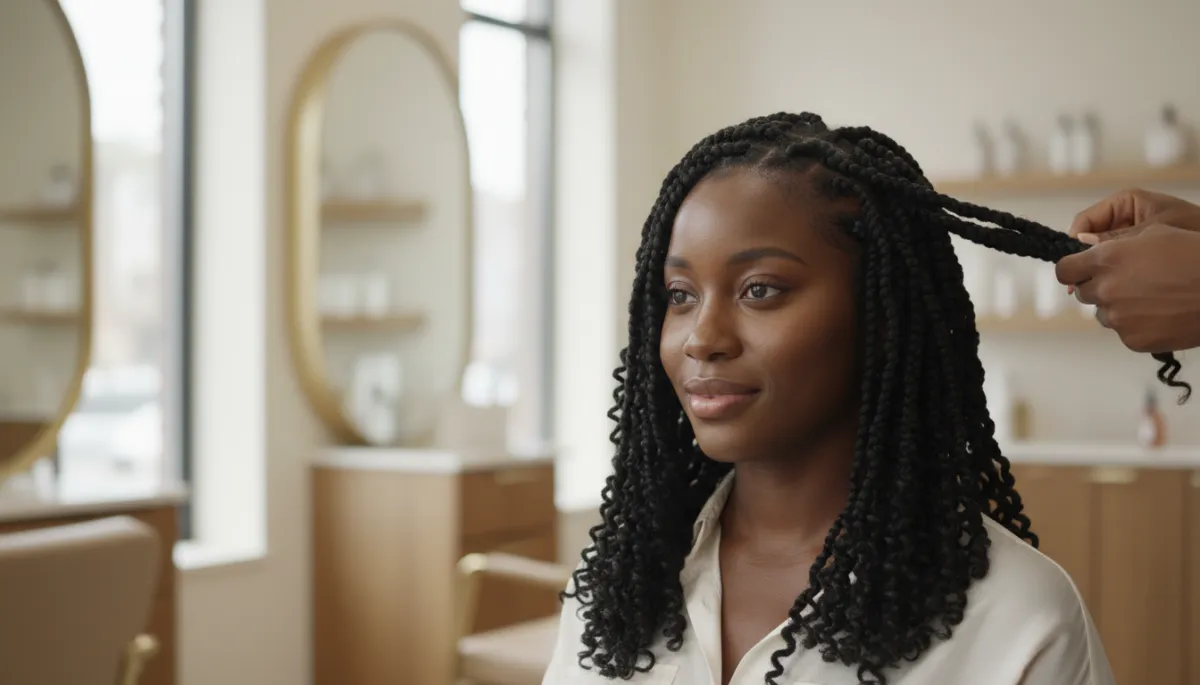
Structured styles like two-strand twists keep curls grouped and reduce the friction that leads to fairy knots.
Detangle Correctly and Gently
How you detangle your hair can either protect your length or encourage breakage. Rough detangling can tighten existing single-strand knots and cause them to snap. A gentle, patient approach helps you work through tangles without tearing through your ends.
Work in sections. Separate your hair into 4 to 8 sections, depending on your density and length, and detangle one section at a time. This keeps things organized and reduces frustration.
Use plenty of slip. Apply a conditioner or detangling product with good slip, so your fingers or comb can glide more easily through your curls.
Start at the ends. Begin detangling from the ends of your hair and slowly work up toward the roots. This prevents you from pushing knots downward and tightening them.
Use your fingers or a wide-tooth comb. Finger detangling lets you feel knots and gently separate them. A wide-tooth comb can be helpful once the hair is mostly detangled with your fingers.
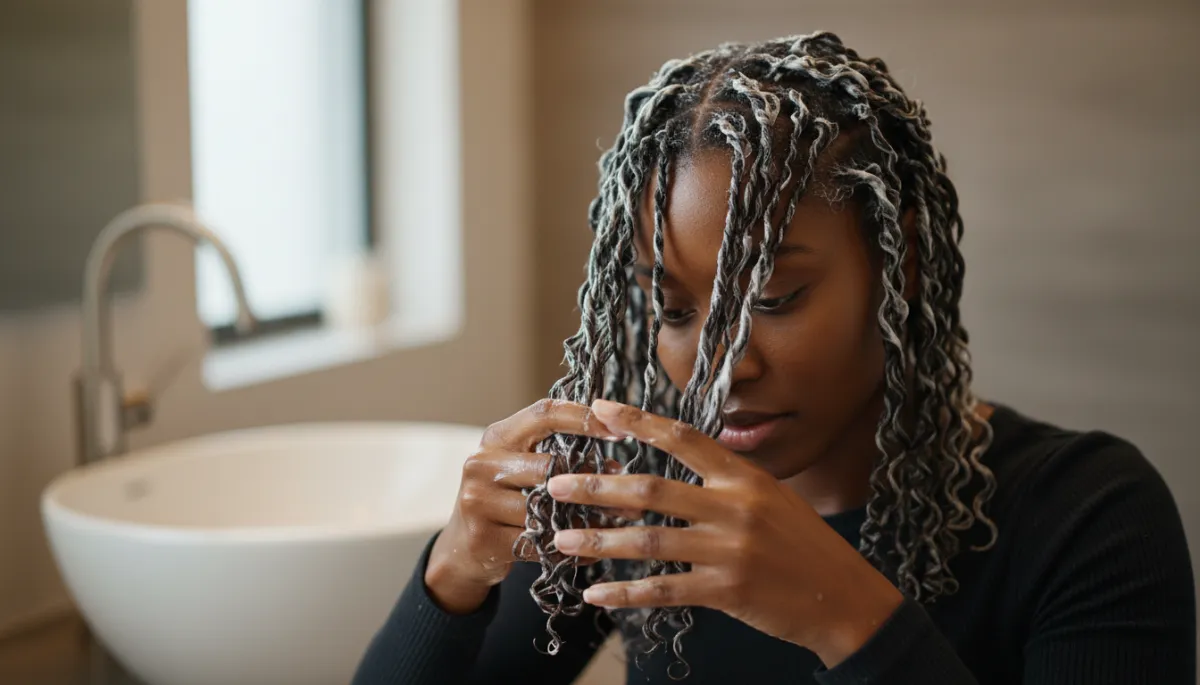
Gentle, sectioned detangling with plenty of slip helps loosen knots without tearing through delicate ends.
Sleep with Hair Protected
Nighttime is often when the most friction happens. If you go to bed with your curls loose on a cotton pillowcase, the fabric can draw moisture out of your hair and cause your strands to rub together all night. Over time, this leads to dryness, tangles, and more single-strand knots. Protecting your hair while you sleep is one of the simplest ways to support healthy ends.
Wear a satin bonnet or silk scarf to reduce friction and help your hair retain moisture.
Use a satin or silk pillowcase as a backup, especially if your bonnet comes off during the night.
Try a loose pineapple, chunky twists, or braids before bed to keep your hair stretched and reduce tangling at the ends.
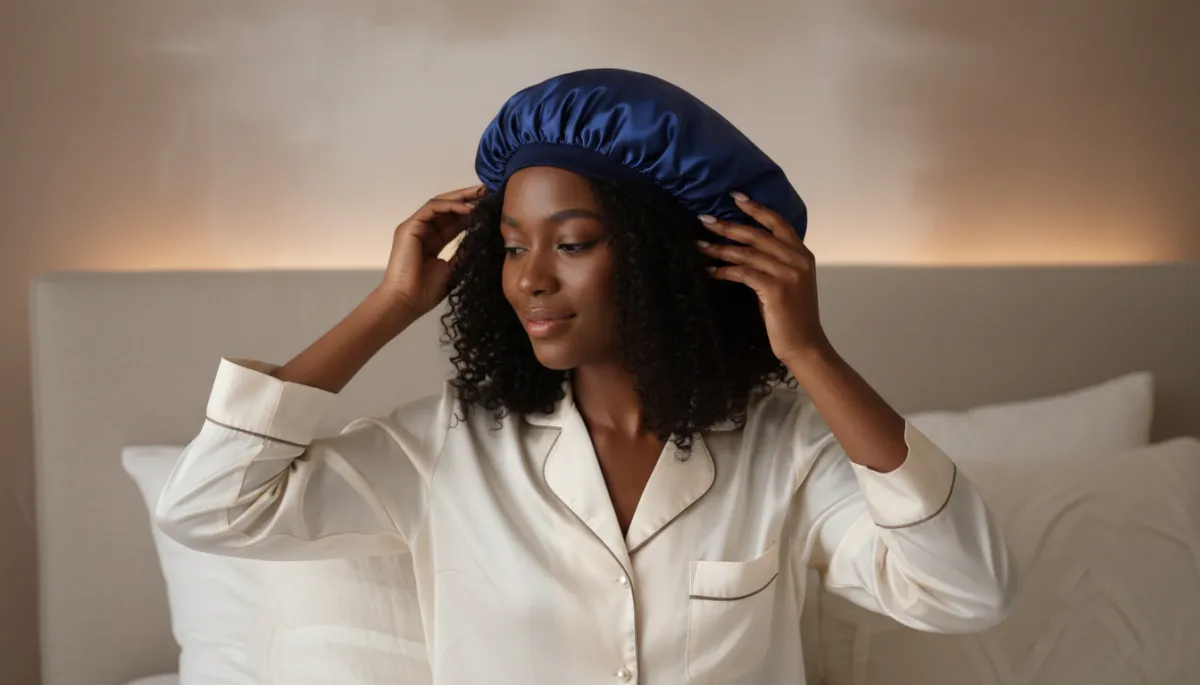
Nighttime protection reduces friction and helps your ends stay moisturized and less prone to knots.
Keep Hair and Scalp Clean
Product buildup can make your hair feel sticky, coated, or stiff. When your curls cannot move freely, they can clump in ways that create knots and tangles. A clean scalp also supports a healthy environment for new growth, even though cleansing alone will not speed up growth. Clean hair simply behaves better and is easier to detangle with less breakage.
If you are unsure how often to wash, especially if you have Type 4 hair, take a look at our article How Often Should You Wash Type 4 Hair?. You can also explore our Scalp Health category and the post Clean Hair Is Part of Healthy Hair for more detailed guidance. At Harmony Strands, we help clients find a cleansing schedule that fits their scalp, lifestyle, and product usage.
Moisture vs. Damage: Why Products Cannot Fix Split Ends
Moisture is essential, but it has limits. No product can permanently repair a split end or a severely damaged section of hair. Conditioners and serums can temporarily smooth the cuticle and make the hair feel better, but once the end is split or a knot has caused a weak spot, that damage will not fully reverse. This is why trimming is so important if you truly want to prevent single-strand knots from taking over your ends.
If you are trying to understand the difference between hydrating your hair and simply coating it, our article Moisture vs. Hydration for Natural Hair: What's the Difference? is a helpful resource. At Harmony Strands, we focus on realistic education. We will never promise that a product can repair split ends. Instead, we help you combine smart moisture care with timely trims so your hair can stay strong and retain length.
Common Mistakes That Increase Fairy Knots
Many people are doing their best with the information they have, but a few common habits can quietly work against your length retention goals. If you are dealing with constant single-strand knots, see if any of these sound familiar.
Skipping trims for long periods, hoping to hold onto every inch of length, while the ends quietly split and knot.
Cutting hair at home with dull scissors or household shears, which crush the ends instead of giving a clean, precise cut.
Ignoring visible split ends and fairy knots, hoping they will smooth out with more product instead of trimming them away.
Brushing or combing dry hair aggressively, especially from roots to ends in one motion, which tightens knots and causes snapping.
Overusing heat tools without proper protection or spacing, which weakens the ends and increases natural hair breakage over time.
Inconsistent moisturizing, going long stretches without hydrating or sealing the hair, especially after cleansing or styling changes.
Sleeping without a satin bonnet, silk scarf, or satin pillowcase, which increases friction and dryness at the ends.
Leaving protective styles in far too long, so shed hairs get trapped and form compact knots that are hard to remove without cutting.
Using heavy layers of products that create buildup, instead of a focused routine that keeps hair clean, hydrated, and flexible.
💡 Pro Tip: You do not have to be perfect. Start by choosing one or two habits from this list to adjust. Even small changes can make a noticeable difference in how often you see single-strand knots at your ends.
Professional Tips from Harmony Strands Hair Studio
As a licensed cosmetologist and natural hair specialist, my goal is to help you build a routine that is realistic for your life and gentle on your hair. Here are some professional recommendations we often share with clients at Harmony Strands in Slidell, Louisiana when they want to prevent single-strand knots and improve length retention.
Healthy Trimming Schedules and Length Retention Strategies
Most clients do well with trims every 8 to 12 weeks. If your hair is recovering from significant damage, you may benefit from more frequent trims at first, then gradually move to a maintenance schedule. Regular trims prevent fairy knots, split ends, and breakage from traveling up the hair shaft. Over time, this supports healthier length retention, even if it feels like you are taking off a little at each visit.
Moisture Routines and Deep Conditioning
We often recommend a consistent wash day routine that includes a gentle cleanser, a nourishing conditioner, and a leave-in or cream that suits your porosity. For many clients, a professional Protective Style Maintenance every few weeks makes a noticeable difference in how soft and manageable their hair feels. Softer hair tangles less and forms fewer knots, especially at the ends.
Protective Styling and Scalp Care
When we design protective styles at Harmony Strands, we think about your scalp, your hairline, your ends, and your lifestyle. A well-planned Protective Styling service can help you reduce daily manipulation while keeping your scalp clean and your hair moisturized. We also offer Scalp Treatment services to support scalp comfort and cleanliness, which helps your hair behave better overall, even though it does not change your natural growth rate.
Customized Consultations and Professional Detangling
If you feel overwhelmed by knots, tangles, or breakage, a Natural Hair Consultation can be a turning point. During a consultation at Harmony Strands, we assess your hair's current condition, look at your ends, ask about your routine, and help you create a realistic plan. For clients dealing with severe tangling or fairy knots, we also offer gentle, Professional Hair Trim and detangling sessions that prioritize preserving as much healthy length as possible while safely removing damage.
When to Book a Professional Trim for Single-Strand Knots
You do not have to wait for a big chop to get your ends back on track. In fact, the sooner you address fairy knots and split ends, the more length you can protect in the long run. Consider booking a professional trim at Harmony Strands Hair Studio if you notice any of the following:
Knots scattered throughout the ends of your hair, especially if they are hard to remove without breaking the strand.
Persistent breakage during detangling, even when you are being gentle and using plenty of slip.
Hair that seems to reach a certain length and then stops, even though your roots are clearly growing in.
Visible split ends, frayed or feathered tips, or a see-through look at the bottom of your hair.
Heat damage, color damage, or sections of hair that no longer curl like the rest of your hair and knot more easily.
A professional eye can help you decide how much needs to be trimmed and how to move forward. At Harmony Strands in Slidell, Louisiana, we always discuss your goals, show you what we see in your ends, and create a plan that balances health and length. Our focus is on honest, realistic care, not quick fixes or pressure to make drastic changes you are not ready for.
Frequently Asked Questions About Single-Strand Knots
What are single-strand knots in natural hair?
Single-strand knots are tiny knots that form when one individual hair strand loops around itself and ties into a small knot. They are especially common in curly, coily, and kinky hair because the bends in the strand make it easier for the hair to twist and wrap onto itself.
Why does my natural hair keep getting fairy knots?
Frequent fairy knots can be caused by dry hair, rough or damaged ends, skipping trims, wearing your hair loose all the time, sleeping without protection, or rough detangling. Tight curls and coils are naturally more prone to single-strand knots, so you may need a routine that focuses on moisture, gentle handling, and protective styling to reduce how often they form.
Can single-strand knots cause breakage?
Yes. Single-strand knots create weak points in the hair shaft. When you comb, brush, or finger detangle, those knots can tighten and cause the strand to snap. Over time, repeated breakage at the ends affects length retention and can make it seem like your hair is not growing, even though it is growing from the scalp.
How often should I trim my natural hair to prevent knots?
Many clients do well with trims every 8 to 12 weeks, but the ideal schedule depends on your hair's condition, styling habits, and goals. If you are seeing a lot of single-strand knots, split ends, or breakage, you may need a trim sooner. A professional trim at Harmony Strands can help reset your ends so they are smoother and less prone to knotting.
Do protective styles prevent single-strand knots?
Protective styles can significantly reduce fairy knots by keeping your ends tucked away and minimizing daily friction. Two-strand twists, braids, cornrows, and buns can all help when installed and maintained correctly. It is still important to cleanse, moisturize, and not leave styles in for too long, or you can end up with knots when you take the style down.
What causes knots on the ends of curly hair specifically?
Curly hair bends and spirals, which makes the ends more likely to wrap around themselves or nearby strands. If the ends are dry, frayed, or damaged, they catch more easily and form knots. Factors like wind, friction from clothing, and sleeping without protection can increase this, especially for Type 3 and Type 4 textures.
Can dry hair cause single-strand knots?
Dry hair is more likely to develop single-strand knots because the cuticle is rough and raised. Rough strands grip each other instead of sliding apart. Keeping your hair moisturized and sealed, and avoiding harsh products that strip your hair, can reduce dryness and help prevent fairy knots from forming so often.
Is finger detangling better than using a comb for preventing knots?
Finger detangling can be very helpful for preventing breakage from single-strand knots because your fingers can feel and gently separate tangles in a way a comb cannot. Many people get great results by finger detangling first, then using a wide-tooth comb on well-lubricated hair to finish. The key is gentleness and working from the ends upward.
How do I stop my hair from tangling at the ends?
To reduce tangling at the ends, keep your hair moisturized, trim regularly, wear protective or low-manipulation styles, detangle gently in sections, and protect your hair at night. Avoid letting your hair rub constantly against clothing, and limit rough brushing or combing on dry hair. Over time, these habits help your ends stay smoother and less prone to fairy knots.
Should I cut off single-strand knots myself?
It is better to have a professional trim your knots and damaged ends with sharp, salon-quality shears. Cutting knots with dull scissors or breaking them off with your fingers can cause more fraying and uneven ends. If you are seeing a lot of single-strand knots, consider booking a Professional Hair Trim at Harmony Strands so your ends can be cleaned up safely and evenly.
Final Thoughts and Next Steps for Healthier Ends
Single-strand knots may be small, but they have a big impact on your hair's health and length retention. When they are combined with split ends, rough detangling, and inconsistent moisture, they can quietly chip away at your ends week after week. The good news is that with the right habits, you can reduce fairy knots, protect your length, and enjoy softer, more manageable curls and coils over time.
At Harmony Strands Hair Studio in Slidell, Louisiana, we are committed to honest, healthy hair education for women with textured hair. Whether you are working with Type 3 curls, Type 4A, 4B, or 4C coils, transitioning hair, low porosity strands, or high porosity hair that drinks up moisture, we are here to help you understand your hair and care for it with confidence.
If you are tired of battling fairy knots, breakage, and tangles at every wash day, consider scheduling a personalized consultation at Harmony Strands. We can assess your ends, recommend a trimming schedule, design a moisture and detangling routine, and help you choose protective styles that truly protect your hair. Our services, including Professional Hair Trims, Deep Conditioning Treatments, Protective Styling, Scalp Treatments, and Silk Press services, are all tailored with healthy hair and realistic expectations in mind.
Preventing single-strand knots will not make your hair grow faster, but it will help you hold onto the length you already have. With consistent moisture, regular trims, gentle detangling, clean hair and scalp, and smart protective styling, you can create an environment where your curls and coils can truly thrive. When you are ready for professional support, Harmony Strands is here to guide you every step of the way.